THE BUSINESS IMPERATIVE
Amidst the dynamic growth of e-commerce in Vietnam, the issue of efficient reverse logistics management is no longer a secondary operational aspect. For business owners and top managers, it is a direct imperative for capital preservation and strengthening market position. A high volume of transactions without an adequate returns processing system leads to unplanned costs, blocked working capital, and, critically, a loss of consumer trust.
The goal of any commercial enterprise is profit generation. A product return, by its very nature, constitutes the annulment of a portion of that profit. The absence of a systematic approach to this process transforms it into a source of operational losses. This encompasses not only direct logistics and processing costs but also reputational risks, which, in the long term, can have a more significant impact on business valuation.
The problem lies not so much in the act of return itself, but in the inefficient collection and reprocessing of returned assets. This necessitates the development of a transparent, predictable, and economically justified strategy that will minimize losses and leverage the returns process as a tool for strengthening loyalty. Without this, any company dealing directly with end consumers, especially in the online sales segment, will face margin erosion and a loss of operational control.
THE OPERATIONAL FILTER
The returns processing workflow in Vietnam is characterized by specific operational challenges. Efficiency here is defined by the ability to adapt to the local infrastructure and regulatory environment. Let's examine the key mechanisms and risks.
Receipt and Identification
The initial stage involves receiving the returned product from the consumer. In the context of a fragmented courier infrastructure, standardizing this process requires significant effort. The lack of uniform packaging standards for returns and the variety of delivery channels complicate initial identification and product registration. The risk lies in receiving incomplete, damaged, or incorrect items, which increases costs for subsequent sorting and assessment.
Transportation and Consolidation
After receipt, the product must be transported to a processing point. This introduces an additional logistical burden. Standard "forward" logistics are optimized for delivery from warehouse to customer; reverse logistics require a different approach—collection from multiple endpoints and transportation to a consolidated hub. This phase is susceptible to risks of damage or loss of goods in transit, as well as increased transit time, which negatively impacts capital turnover.
Sorting, Assessment, and Decision-Making
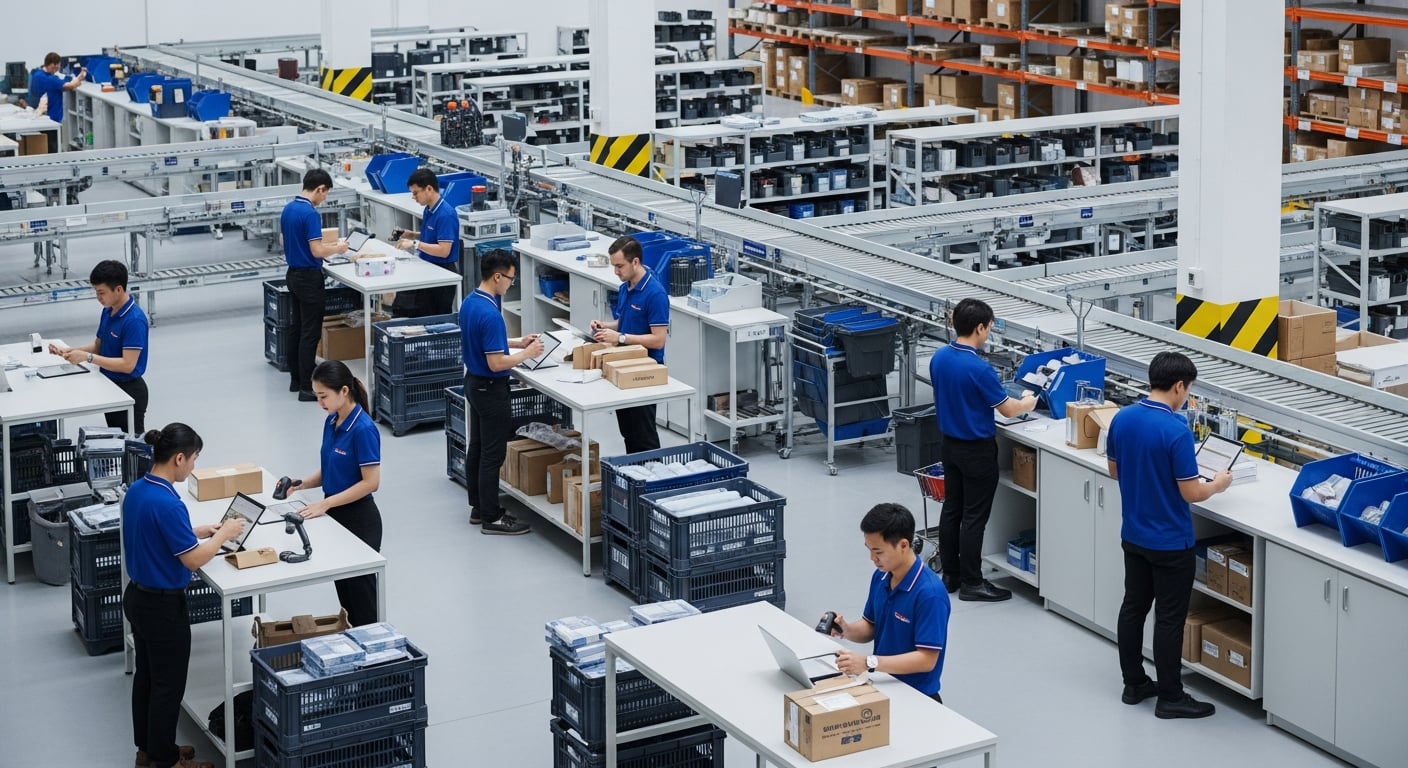
The arrival of goods at a warehouse or processing center necessitates detailed sorting. Each returned item must be assessed for its condition: new, resalable, requiring repair, disposal, or potentially a fraudulent return. This stage is a complex operational area with a high cost of error. Incorrect assessment leads either to the resale of defective goods (which damages reputation) or to the unjustified write-off of a valuable asset. Automation and standardization of inspection procedures are critically important here.
Customs and Regulatory Aspects
For goods imported into Vietnam, reverse logistics can entail additional customs complexities. The possibility of re-import without repeat duties or receiving refunds for previously paid taxes depends on strict adherence to procedures and the availability of appropriate documentation. Insufficient attention to these aspects can lead to a significant increase in regulatory costs and border delays.

THE ECONOMICS OF THE PROCESS
It is a mistake to view a return as an isolated event. Its economic impact is distributed across the entire value chain, affecting unit economics and overall profitability. Key points of profit erosion include:
Direct Logistics Costs
These include the cost of collecting the item from the customer, its transportation to the processing center, and if necessary, to the manufacturer or repair center. In Vietnam, where logistical distances can be long and infrastructure uneven, these costs can be comparable to those of "forward" delivery.
Processing and Inspection Costs
Every returned item requires labor for receipt, unboxing, condition verification, repackaging (if possible), and warehousing. A lack of automation at this stage significantly increases variable costs per return unit.
Loss of Product Value
Not all returned products can be resold as new. Some may require markdown due to opened packaging, minor damage, or expiration during the processing cycle. Certain items will be subject to disposal. This represents a direct loss on inventory investment.
Blocked Working Capital
While a product is in the returns process, its value remains "frozen," generating no revenue. Lengthy reverse logistics cycles directly reduce capital turnover, which is particularly critical for companies with limited financial resources.
Tax and Regulatory Costs
Depending on the product category and reason for return, complexities may arise with reclaiming VAT or other taxes paid during the initial sale. For cross-border operations, this can also mean non-recoverable customs duties.
Hidden Costs
These include administrative costs for handling customer inquiries, dispute management, and document reissuance. These costs are often underestimated but can constitute a significant portion of operational expenses with a high volume of returns. The risk of losing operational control and experiencing margin erosion increases exponentially in the absence of a transparent system for accounting for all these components.
MODEL AUDIT
Choosing the optimal model for returns management dictates the level of control, costs, and speed of adaptation. Let's examine three main models.
Model 1: Marketplace
When utilizing a marketplace, some returns processing functions are delegated to the platform. This can reduce the direct operational burden on the seller.
- Advantages: Simplified logistics for the seller, standardized marketplace procedures, potentially lower direct costs for collection and initial processing.
- Disadvantages: Limited control over the process (lack of influence over speed, inspection quality), dependence on marketplace policies, potentially opaque returns processing fees, risk of customer data loss. Margin erosion can be embedded in platform tariffs.
Model 2: In-house Infrastructure
Establishing and managing one's own reverse logistics system.
- Advantages: Full operational control, potential for deep integration with internal systems (CRM, ERP), maximum flexibility in adapting processes to product specifics and customer requirements, opportunity to leverage returns for loyalty enhancement. Quality control of inspection remains within the company's hands.
- Disadvantages: High initial investments (CAPEX) in warehousing, equipment, and IT systems. Significant operational expenses (OPEX) for personnel, training, and transportation. Scaling in a complex operational area with a high cost of error requires substantial resources and expertise.
Model 3: Partnered (3PL)
Delegating reverse logistics functions to a specialized third-party provider (3PL).
- Advantages: Ability for rapid scaling, access to 3PL operator expertise and infrastructure, reduced CAPEX, focus on core business activities. Specialized partners can offer optimized routes and technologies.
- Disadvantages: Dependence on partner service quality, need for strict SLA monitoring, potential issues with IT system integration, data leakage risks. It is crucial to carefully select a partner with specific experience in reverse logistics in Vietnam.
THE SOLUTION ALGORITHM
An effective returns management strategy requires a consistent, phased approach. The goal is to create a system that minimizes losses and upholds brand reputation.
Step 1: Audit Current Processes and Data
Begin with an in-depth analysis of existing returns processes. Which products are returned most frequently? What are the reasons for returns? What are the current costs of processing a single return? What are the return timelines? Utilize internal data to identify "bottlenecks." This analysis will help pinpoint the most critical areas for optimization. The focus should be on facts, not assumptions.
Step 2: Develop Regulations and Standards
Create clear, detailed Standard Operating Procedures (SOPs) for each stage of reverse logistics: from product receipt from the customer to its final disposition (resale, repair, disposal). Include instructions for quality inspection, packaging, and document flow. This will minimize human error and increase process predictability.
Step 3: Select Technological Solutions
Integration of Warehouse Management Systems (WMS) and Customer Relationship Management (CRM) with a reverse logistics module is critical. This will ensure transparency of each return's status, automate customer notifications, and provide accurate accounting. Consider using product tracking systems to minimize risks of loss during the process.
Step 4: Pilot Testing
Before implementing a new system at scale, conduct a pilot project. Select a specific product category or geographical region. This will allow for identifying and correcting shortcomings in a controlled environment, assessing real costs and effectiveness without risking the entire business. Focus on metric collection and adjustment.
Step 5: Optimization and Scaling
Based on the pilot results, make necessary adjustments to processes, regulations, and technological solutions. After successful refinement, proceed with phased scaling of the system across your entire product range or geographical footprint. It is crucial to continuously monitor Key Performance Indicators (KPIs) – return rate, average cost of return processing, processing speed, and the percentage of items that can be resold. Continuous optimization is key to long-term efficiency.
Effective reverse logistics management in Vietnam is not merely a reaction to problems, but a strategic investment in business sustainability and customer loyalty. An approach based on precise analysis, standardization, and technological support is the only way to minimize risks and transform potential losses into a competitive advantage.