WHAT HAPPENED: Vietnam on the Cusp of Strategic Transformation
In early June 2026, Vietnam hosted a significant national scientific conference dedicated to developing a new model for the country's development. The central theme of discussion was an ambitious vision: transforming Vietnam into a high-income nation by 2045. The event was led by Politburo member, Party Central Committee Secretary, and Chairman of the Central Theoretical and Political Affairs Commission, Mr. Nguyen Thanh Nghi, underscoring the paramount political importance of this initiative.
This conference is not merely a routine event but an indicator of a profound and systemic revision of the country's economic strategy. Vietnam's leadership recognizes that continued growth cannot rely solely on a model of low-cost production and raw material exports. The goal of becoming a high-income economy by 2045 necessitates fundamental changes across all sectors: from education and technology to infrastructure and regulation. This signifies a shift towards an innovation-driven economy, enhancing labor productivity, developing services, and creating added value, rather than simply increasing volumes.
Such strategic shifts at the state level inevitably impact global supply chains, consumer markets, and the competitive landscape. For Russian e-commerce businesses actively working with Vietnamese suppliers or targeting the Asian market, understanding these long-term trends becomes critically important for maintaining competitiveness and identifying new opportunities.
WHAT THIS MEANS for Russian E-commerce
Changes in Consumer Demand
Achieving high-income status signifies a significant increase in the welfare of Vietnam's population. As disposable incomes rise, consumer demand will inevitably evolve. While previously the focus was on affordability and basic needs, by 2045, Vietnamese consumers will seek higher-quality, branded goods, innovative solutions, and personalized services. A substantial growth of the middle class is anticipated, which will become the primary driving force of the domestic market.
For Russian entrepreneurs, this opens up new opportunities to sell more expensive and higher-margin goods to Vietnam. This could include proprietary Russian brands, as well as goods sourced from other countries but sold through e-commerce platforms to the Vietnamese market. However, it also implies intensified competition from international brands, which will also seek to establish their niche in a growing and more affluent market.
Transformation of Logistics Chains
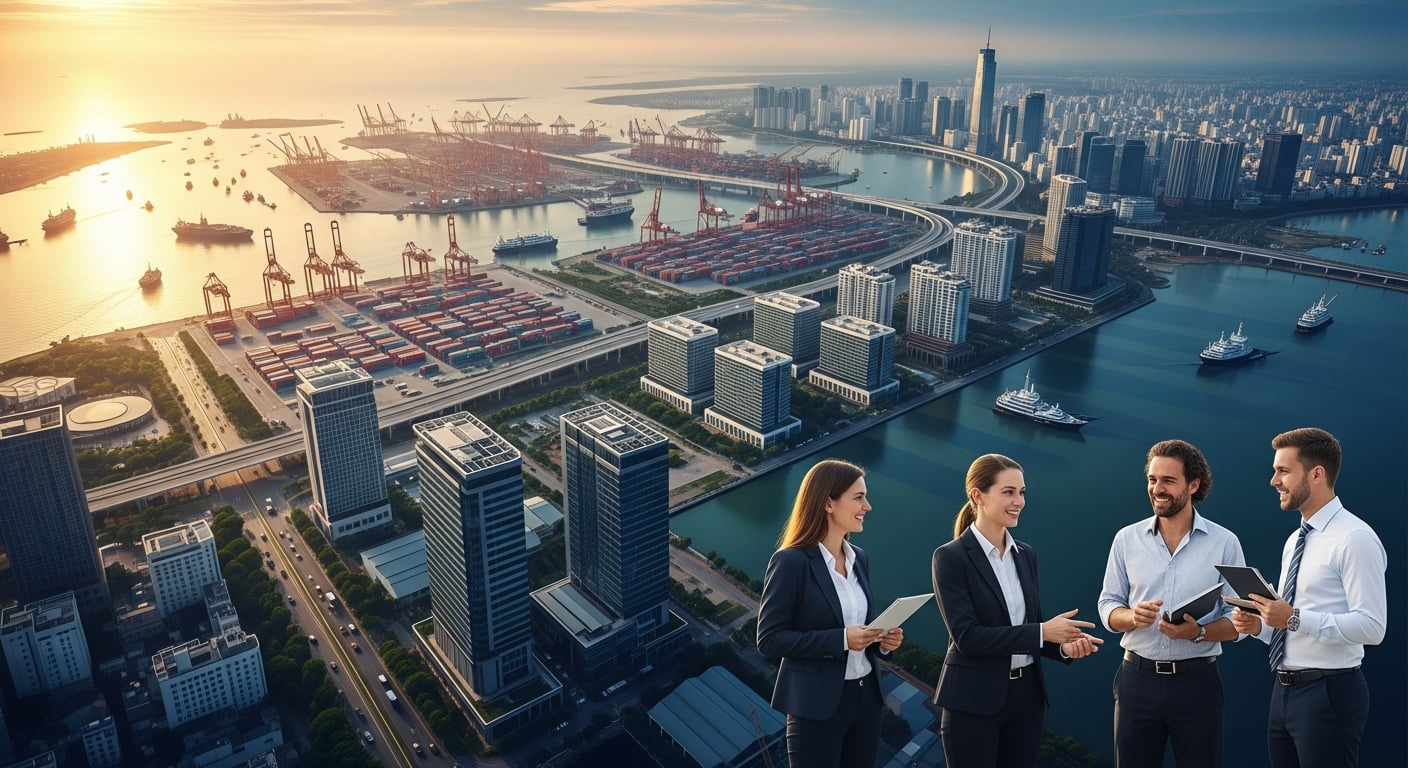
The pursuit of high income entails massive investments in infrastructure. This will include port modernization, expansion of road networks, development of railway connectivity, and, crucially for e-commerce, improvement of digital infrastructure and "last-mile" delivery. By 2045, logistics in Vietnam will become significantly more efficient, faster, and integrated, simplifying the delivery of goods both domestically and for export.
However, an uplift in the economy will also lead to increased costs. Higher labor costs are anticipated, along with stricter environmental regulations and standards, which may impact the overall price of logistics services. Russian e-commerce companies using Vietnam as a logistics hub or transit point will need to adapt to these changes, potentially by re-evaluating their supply chains and opting for more efficient, yet potentially costlier, routes or delivery methods.
Restructuring Price Competition and Production Base
One of Vietnam's key characteristics as a "world factory" has been its low production costs. However, as it moves towards high-income status, this paradigm will begin to shift. Rising wages, upskilling of the workforce, and investments in more complex, capital-intensive manufacturing will lead to an increase in the cost of Vietnamese goods. Vietnamese enterprises will strive to move away from the "cheap production" model towards creating products with high added value, innovation, and proprietary brands.
This means that for Russian e-commerce entrepreneurs who source goods from Vietnam for price advantages, the market may become less appealing in the long run. They will either need to shift their focus to other countries with lower costs, or, preferably, seek new partners in Vietnam offering unique, high-tech, or specialized products where competition is not based solely on price. Emphasis on quality, design, and innovation will become a priority.
VIETSMART EXPERT COMMENTARY
Vietnam's strategic decision to transition to a high-income economy by 2045 is not just an economic goal but a signal of profound structural changes. For Russian e-commerce entrepreneurs who have traditionally viewed Vietnam primarily as a source of inexpensive goods or as a developing market with high growth potential, it is time for a strategic re-evaluation. Familiar business models based solely on price competition and mass production may become less effective. Vietnam is transforming from a "world workshop" into a "center of expertise" in certain industries, and its population from consumers of basic goods into a demanding middle class.
At VietSmart, we are convinced that success in the new Vietnam will depend on flexibility, foresight, and a willingness to invest in long-term and more complex partnerships. This is not merely a matter of finding a new supplier but a strategic decision on how your business can integrate into a new, more sophisticated, and dynamic economic ecosystem. Russian companies must start studying and forecasting these changes now to avoid being left behind.

CONCLUSIONS AND WHAT TO DO: Concrete Steps for Russian E-commerce
- Re-evaluate Sourcing Strategies: Abandon long-term reliance on Vietnam solely as a source of low-cost goods. Seek suppliers offering unique, high-quality, or innovative products. Consider diversifying sourcing to other Southeast Asian countries or focusing on specific, high-tech niches in Vietnam, such as electronics or precision mechanics, where Vietnam will develop its competencies.
- Invest in Consumer Demand Analysis: If your e-commerce business targets sales to Vietnam, it is crucial to thoroughly study the evolving preferences of Vietnamese consumers. Focus on offering mid-range and premium segment goods, considering brand value, design, environmental friendliness, and social responsibility. It is projected that by 2030, the proportion of consumers willing to pay more for branded goods will significantly increase.
- Optimize and Diversify Logistics Routes: Assess the potential increase in logistics costs from and within Vietnam. Explore new, more efficient, and possibly multimodal routes. Invest in digital solutions for supply chain management to minimize costs and enhance transparency, as digital integration of logistics operators is expected to become standard by 2028.
- Develop Long-term Partnerships: Instead of one-off transactions, build strategic relationships with Vietnamese manufacturers and distributors. Consider options for joint ventures, production localization, or licensing to gain access to the domestic market or new technologies that will develop in the country.
- Monitor Regulatory Changes: Keep abreast of changes in Vietnamese legislation concerning taxation, import duties, production standards, and consumer protection. As the economy grows, the regulatory environment will become more complex, and a proactive understanding of new rules will help avoid unforeseen costs and risks.
Source: VnEconomy EN — Business as of June 9, 2026