WHAT HAPPENED
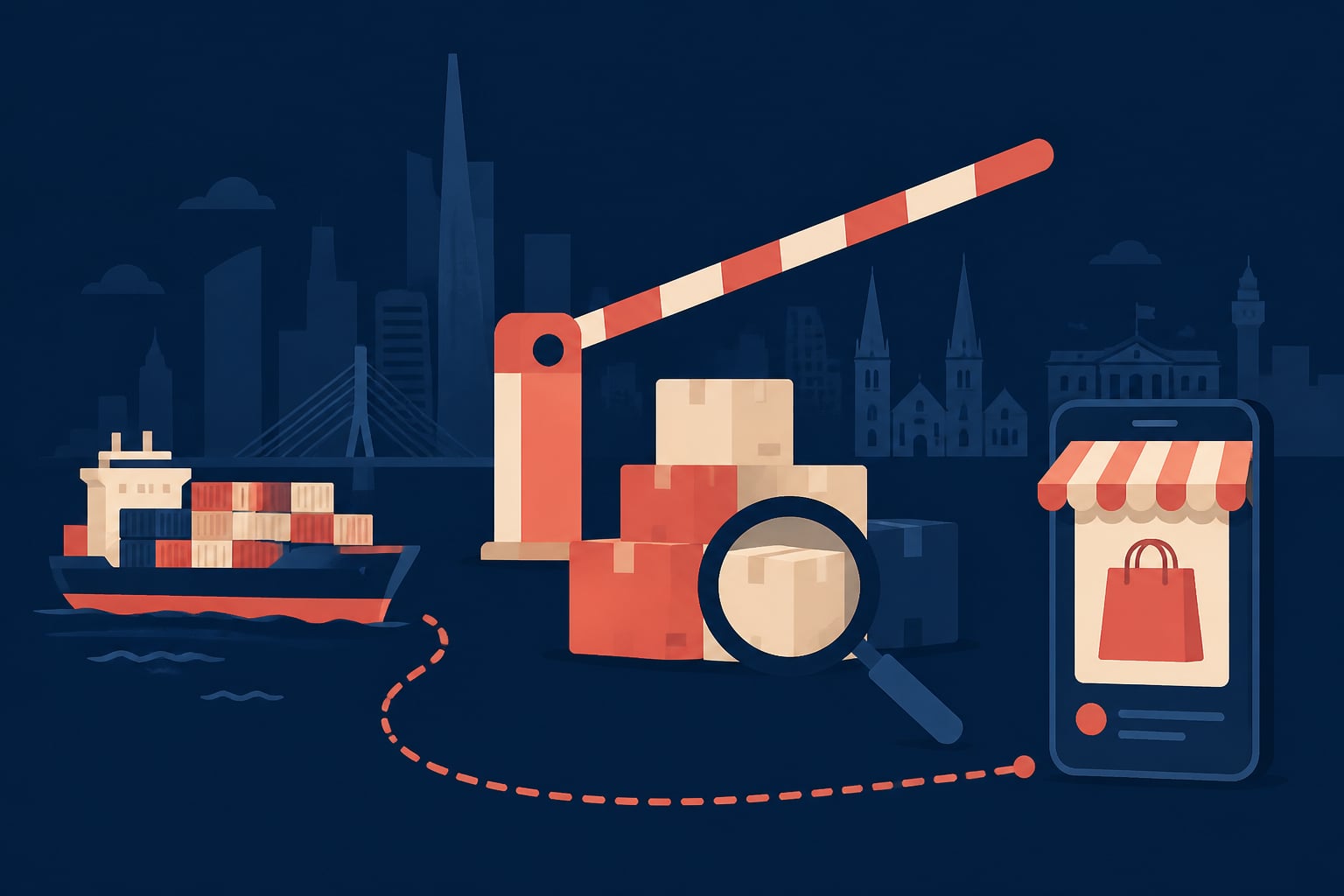
On August 23, 2026, Vietnam approved amendments to the Customs Law (Luật Hải quan) — as reported by the official portal of the Ministry of Justice of Vietnam. The key point: the principle of customs inspection for goods arriving through e-commerce channels is now enshrined in law. That means parcels and consolidated shipments that previously passed through a simplified regime now formally fall under full customs control — including checks for intellectual property infringement.
In parallel, the Ministry of Finance issued Directive Thông tư 06/2026/TT-BTC, which amends the procedures in force since 2015 for inspection, monitoring, and suspension of customs operations for goods requiring IP protection. The document was published in the official gazette Cổng thông tin điện tử Chính phủ. Essentially, this is a mechanism: if customs suspects counterfeiting, the procedure is halted — and the cargo sits until its legality is confirmed.
The operational groundwork was laid even earlier. Vietnam's General Department of Customs issued a series of directives in 2026 — công văn 15923/CHQ-ĐTCBL (May 6), 16226/CHQ-GSQL (May 13), and 16727/CHQ-GSQL — all of which concern strengthening the suspension of customs procedures for goods with signs of IP infringement, according to the archive Dữ liệu Pháp luật. There is also a political framework: Nghị quyết 397/NQ-CP of December 5, 2025 — a plan to combat smuggling and counterfeits through 2030, plus Công điện 38/CĐ-TTg of May 5, 2026.
WHAT THIS MEANS
For a Russian e-com entrepreneur sourcing from Vietnam, this is not an abstract legal news item. It is a change in operations. Previously, the scheme was simple: find a factory in Ho Chi Minh City or Hanoi, order a batch, process it as an e-commerce shipment, and receive the goods with minimal customs attention. Now the e-commerce channel is officially recognized as an inspection zone — meaning every batch can be stopped if an inspector has questions about the brand.
The scale of control is visible in the numbers. In the first six months of 2026, the Ministry of Industry and Trade (MOIT), together with e-commerce platforms, removed more than 9,000 products infringing copyrights and trademarks and recorded over 1,500 counterfeiting cases, according to MOIT. Separately, customs reported in May–June 2026 nearly 15,000 seized units of cosmetics and branded goods with signs of counterfeiting — including mentions of L'Oreal, The North Face, and Apple — according to Báo Chính Phủ. These are two different metrics — removed listings versus physical seizures — but both show the same thing: the filter has become tighter.
What this means in practice. First: if you ship goods under your own brand but without trademark documents in Vietnam, the risk of stoppage increases. Customs is not obliged to figure out who you are — it sees a shipment and a potential violation. Second: if you source from a Vietnamese manufacturer making a "similar" product, that is already a red zone. Third: delivery timelines cease to be predictable. A suspension of procedures is not one day — it is weeks, and for a marketplace, a week's delay means lost sales and broken promotions.
And fourth, the most unpleasant: the cost of entry is rising. Legal import with a full package of documents — certificates, confirmation of IP rights, correct classification — costs more than a grey scheme. But the grey scheme no longer saves money; it creates risk. According to Plan Kế hoạch 1515/KH-BCĐ389 for 2026, published by the Ministry of Industry and Trade, oversight of supplies through electronic channels is a separate area of work.
VIETSMART EXPERT COMMENTARY
I have been working with supplies from Vietnam for years, and I see the same mistake among Russian entrepreneurs: they perceive Vietnam as a "cheap market without rules." That was true about five years ago. Today, in operations in Ho Chi Minh City, I see something different: factories themselves ask to confirm that the client has brand rights, because they fear falling under inspection. Partners come with questions not about "how to smuggle it in" but about "what documents to gather so it doesn't get stuck at customs." This is a 180-degree turn.
What I would do right now if I were a Russian entrepreneur. First — stop skimping on legal brand checks. If you sell under your own name, register the trademark in Vietnam or at least obtain written confirmation from the manufacturer that it does not use third-party elements. Second — revise contracts with suppliers: add a clause on liability for counterfeiting and an obligation to provide documents upon first request. Third — build a buffer of at least two weeks into delivery timelines in case of a stoppage. That is cheaper than a ruined season.

CONCLUSIONS AND WHAT TO DO
- Check the legal cleanliness of your brand: if you sell under your own name, register the trademark in Vietnam or obtain written confirmation from the manufacturer that there are no third-party elements in the design and packaging.
- Revise contracts with Vietnamese suppliers: add a clause on liability for counterfeiting and an obligation to provide certificates and IP documents upon customs' first request.
- Build in a buffer in timelines: at least two weeks in addition to standard transit — a customs suspension over IP is not resolved in a day.
- Gather your document package in advance: conformity certificates, confirmation of trademark rights, correct product classification — so that if stopped, you have something to present to the inspector the same day.
- Avoid purchasing "similar" goods from manufacturers without confirmed rights: savings on procurement do not cover the risk of batch seizure and blocked supplies on the marketplace.
Source: Managing Intellectual Property, September 11, 2026