
WHAT HAPPENED
Ho Chi Minh City's economy grew 9.86% year-on-year in the third quarter of 2026 — the fastest pace in a decade, according to VNExpress. For a city that just a few quarters ago was teetering on the edge of a slowdown due to weak export demand, this turnaround isn't a cosmetic figure — it's a regime change.
Notably, the city's figure almost matched the national one: according to the Vietnamese government's official portal Chính phủ, the country's GDP grew approximately 9.95% year-on-year in the same quarter. In other words, the southern industrial hub isn't just pulling up national statistics — it's growing in sync with them, not by offsetting a downturn in other regions.
It's also worth keeping the planning horizon in mind: Ho Chi Minh City has launched a program to sustain double-digit growth for 2026–2030, with priorities in infrastructure, logistics, the maritime economy, and an international financial center, writes VnEconomy. The third-quarter record isn't a one-off spike but the start of a five-year period in which demand for land, capacity, and labor will only grow.
WHAT IT MEANS
For a Russian e-commerce entrepreneur sourcing from Vietnam, the city's economic growth translates into three concrete effects: product price, delivery time, and availability of factory slots. All three are moving away from comfort.
The first effect is land and capacity. According to Cushman & Wakefield, in the southern economic zone in 2026 there was virtually no new supply of industrial land, and demand shifted to Dong Nai, Binh Duong, and Tay Ninh. Rental rates and industrial park occupancy remain high, and available ready-built factories are becoming scarcer. When a factory is 90%+ utilized, the conversation about price changes: the supplier is no longer negotiating for volume; they're choosing whose order to take.
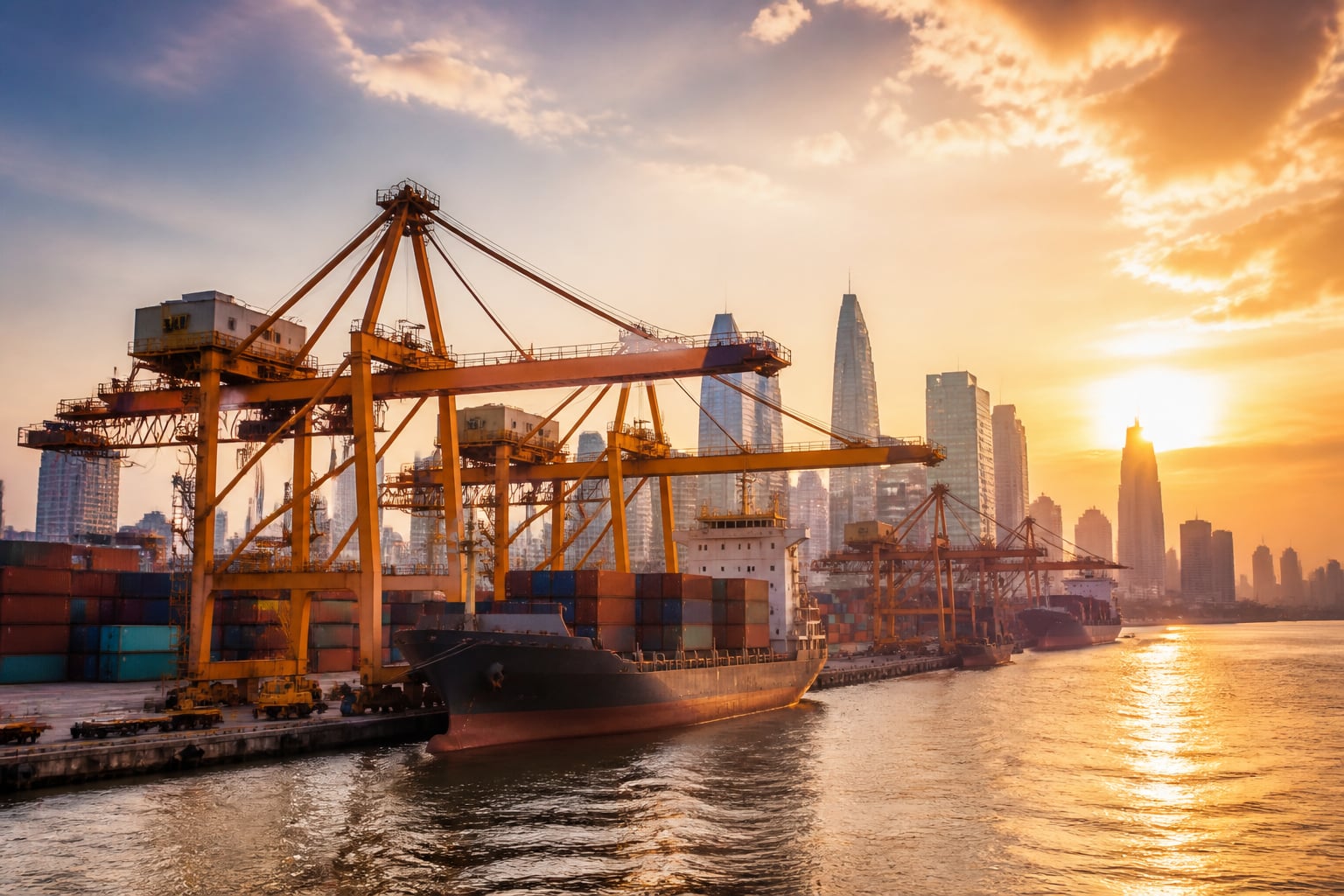
The second effect is logistics. The deep-water terminal cluster of Cái Mép – Thị Vải is operating at its limit: according to Saigon Newport Corporation, the cluster's terminals are hitting monthly throughput records, and MBS analysts in an April 2026 report explicitly note that most terminals are operating at or near design capacity. An overloaded terminal means not only delay risk but also higher port fees, which ultimately get baked into freight costs.
The third effect is competition for suppliers. FDI companies are expanding production in southern provinces precisely because there is no land for new factories in Ho Chi Minh City itself, notes Shinhan Securities in its report on industrial parks for the second half of 2026. A Russian seller with an order of 5,000–10,000 units competes for slots with a Korean or Japanese manufacturer ordering millions. Those who haven't locked in price and schedule in advance will get either a refusal or a 15% price hike in the spring.
I see this in operations every week. In August, we asked three Ho Chi Minh City textile factories to confirm prices for the first quarter of 2027 — two replied that they would hold prices only until the end of November 2026, and the third said outright: "First confirm the volume, then we'll talk about price." A year ago, on the same request, we were calmly given price locks for two quarters ahead. The market has flipped in favor of the supplier, and you feel it not in reports but in correspondence.
VIETSMART EXPERT COMMENTARY
What we would do right now if we were a Russian entrepreneur. First, stop treating Vietnam as a "cheap reserve" and start treating it as a market with rising costs, where the winner is the one who locks in terms before others. Second, split the assortment: keep products with long production cycles and high margins in southern Vietnam, while testing simple, thin-margin items in northern provinces or moving to other countries while the price difference still justifies restructuring the supply chain.

And the third thing we're already doing for our partners: calculating not just the unit price but the total cost of ownership of a batch — including possible increases in port fees and the cost of money frozen in goods stuck at an overloaded terminal. A 4% price difference between two factories is easily eaten up by two weeks of container downtime.
CONCLUSIONS AND WHAT TO DO
- Lock in prices before the end of 2026. Request written price confirmation from your current suppliers for at least the first quarter of 2027. If a factory refuses, that's already an indicator of its utilization — look for an alternative now, not in December.
- Check your factories' utilization. Ask the manager directly: what percentage of capacity is booked for the next two quarters. An answer of "about 90%" means your next order could be pushed back without warning.
- Recalculate logistics with Cái Mép congestion in mind. Build an additional buffer of 7–10 days for terminal handling into your supply plan and check current fees with your forwarder — they change with terminal utilization.
- Diversify geography within Vietnam. Test at least one product line in Dong Nai, Binh Duong, or Tay Ninh: there are still available ready-built factories there, though the window is also closing.
- Review your assortment matrix by margin. Remove items where a 10–12% increase in purchase price kills the product's economics from the Vietnamese pool in advance, while you still have time to find a replacement, not while stock is running out.
Source: VnExpress International — Business dated October 5, 2026