
WHAT HAPPENED
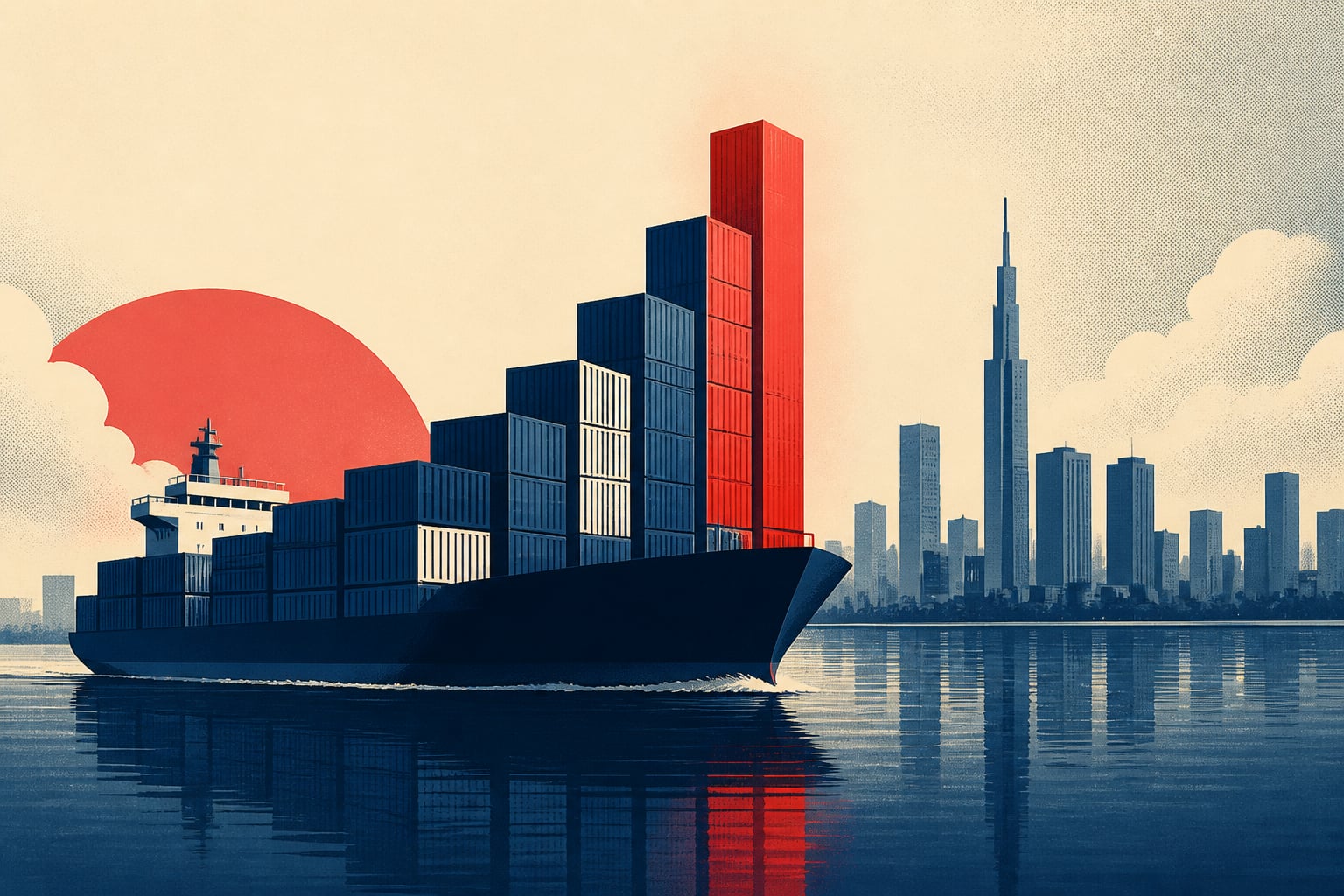
Ho Chi Minh City authorities have stated that by the end of full-year 2026, registered foreign direct investment in the city could reach approximately $19 billion. This is reported by VnEconomy. The drivers are multi-billion-dollar projects in seaports, artificial intelligence, logistics, and urban infrastructure. In other words, the money is not going into garment workshops but into the "skeleton" of the economy: terminals, data centers, warehouses, roads.
The plan has already been exceeded with room to spare. According to the Ho Chi Minh City Department of Finance, cited by VnEconomy, in the first eight months of 2026 registered FDI exceeded $10.06 billion — up 167.3% year-on-year. A separate storyline is technology: VietnamNet reports roughly $6.6 billion in technology project investment by mid-2026, including two hyperscale data centers with a combined value of about $1 billion.
The figures in various publications diverge, and that is important to understand. Some sources cite ~$7.5 billion for the first half of 2026, others $10.06 billion for eight months, and still others a full-year target of $19 billion. The reason is not errors but differing methodologies: "registered capital" and "actually disbursed projects" are two different indicators with different lags.
WHAT IT MEANS
For a Russian seller, this news may look distant, but it directly affects three things: production timelines, logistics costs, and the cost of entry into a category. The logic is simple. When billions flow into a city's ports and warehouses, the supply of quality logistics infrastructure grows — but so does competition for it. A large foreign investor with a five-year contract gets priority access to a terminal and Class A warehouse. A small buyer from Russia does not.
The second effect is labor. Data centers, AI projects, and logistics hubs absorb engineers, operators, and warehouse managers. Factories that make goods for marketplaces compete for the same personnel. From my experience working with factories in Binh Duong and Long An, back in 2024 a quality manager at a production facility earned one amount, and today the factory has to pay noticeably more to avoid losing that person to the data center around the corner. This slowly but steadily pushes up the unit cost of goods.
The third effect is land and rent. Growing industrial and logistics demand pushes up rates for warehouses and production space. A JLL report and an independent MLT market study for 2025–2026 record sustained growth in demand for logistics properties in Vietnam amid retail and e-commerce development. For a seller, this means it becomes harder to "nudge" a supplier into lowering prices — their fixed costs have risen.
And separately on entry costs. According to Vietnam Briefing, logistics costs in Vietnam amount to roughly 16–17% of GDP — higher than in Thailand and Malaysia. The cross-border e-commerce market was valued at approximately $1.2 billion in 2025. The infrastructure boom will eventually bring these figures down, but not instantly: building a port and a data center takes years, not quarters.
VIETSMART EXPERT COMMENTARY
In Ho Chi Minh City operations, I see the same mistake among Russian sellers over and over: they read news about billion-dollar FDI and conclude "so everything there is cheap and fast." It is exactly the opposite. A capital inflow into infrastructure is a signal that in 12–24 months logistics will get better, while production capacity and warehouses will get more expensive and scarcer. Factories that today are willing to do a trial batch of 500 units will tomorrow go to a contract with a major brand and put you in a queue.
What I would do right now if I were an entrepreneur: lock in terms with a supplier for 6–9 months ahead while the factory is still interested in small orders. And in parallel, check alternative locations — not only Ho Chi Minh City but also Hai Phong and Da Nang, where the infrastructure boom is just beginning and rates are lower.

CONCLUSIONS AND WHAT TO DO
- Lock in prices and volumes with your current supplier for 6–9 months. Rising FDI in logistics and industry means that in two to three quarters factories will start revising prices upward. A fixed contract is your insurance.
- Ask your supplier to confirm production capacity and utilization. Not general words but specifics: how many lines, what utilization is expected in the coming months, is there reserve capacity for your volume. If the factory is loaded at 90%+, look for a second site.
- Check alternative regions. Hai Phong, Da Nang, Binh Duong — infrastructure projects are growing there too, but competition for factories and warehouses is lower than in Ho Chi Minh City. Compare landed cost, not just price per unit.
- Recalculate your logistics lead. With logistics costs at 16–17% of GDP (Vietnam Briefing), every week of delay at customs or in a warehouse is direct money. Build in a buffer on timelines and do not build your chain on a single carrier.
- Track official statistics. Monthly reports from the Foreign Investment Agency (fdi.gov.vn) show the real structure of inflows by sector. If the money is going into ports and data centers rather than light industry, expect your suppliers' costs to rise.
Source: VnEconomy EN — Digital Biz, September 29, 2026