
WHAT HAPPENED
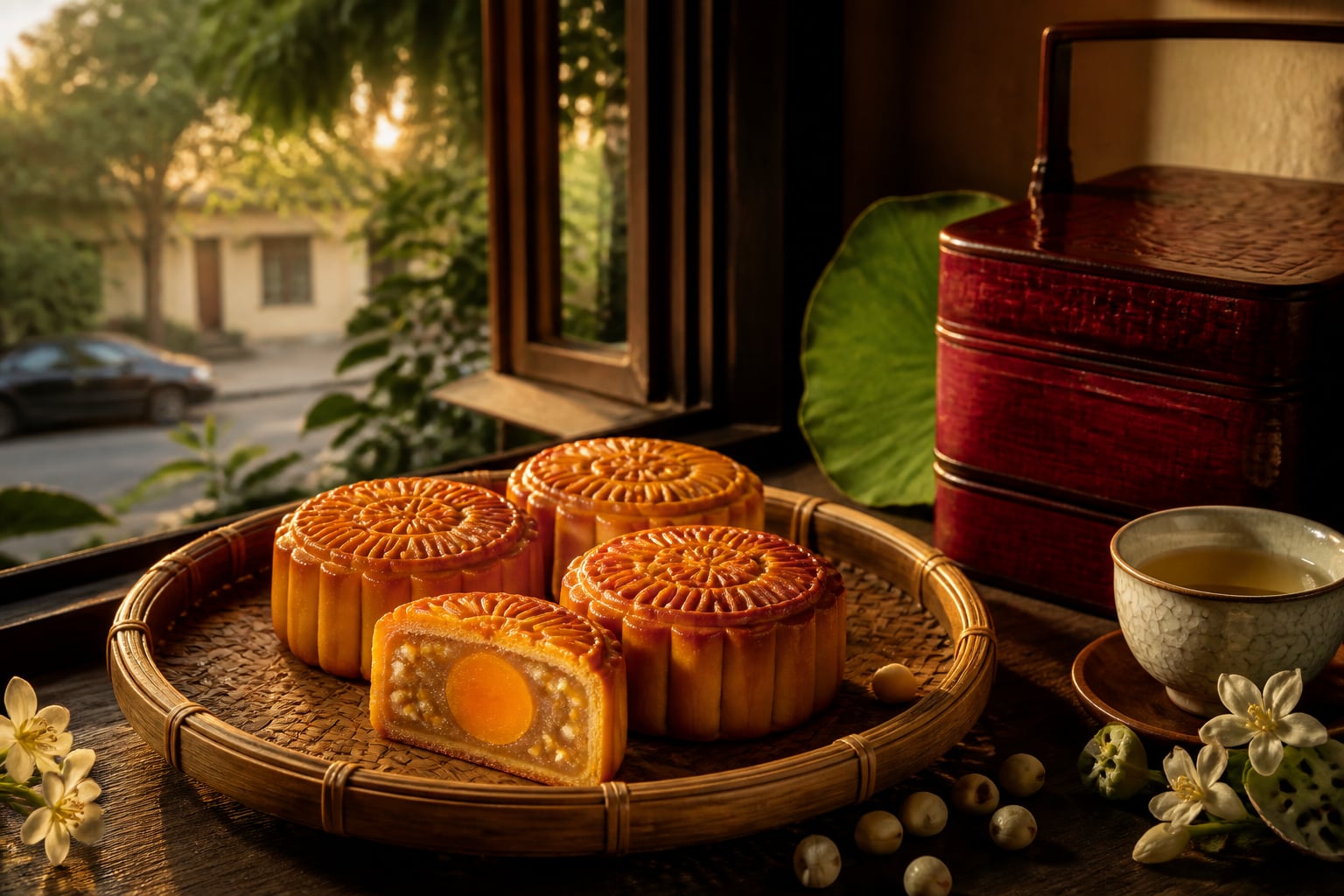
In the month from August 19 to September 18, 2026, Vietnamese shoppers spent nearly 159.3 billion dong on mid-autumn mooncakes (bánh Trung thu) on just two platforms — Shopee and TikTok Shop. That's 61.7% more than in the same period a year earlier, according to VietnamNet, citing data from research platform Metric. The bulk of the money went to TikTok Shop — about 111 billion dong versus 48.3 billion on Shopee, VTC News reports.
The holiday drew nearly 1,695 shops selling mooncakes on these two platforms during the same period, according to Người Quan Sát. The top sellers were large 300–350g items and mochi variations with egg and dried meat fillings: 7 out of the 10 best-selling SKUs fall into these formats, notes MarketTimes. Expensive gift sets over 1 million dong account for a small share of turnover.
An important detail for analysts: Metric's figures vary across publications. Kinh Te Duong cites about 51.7 billion dong and roughly 796,000 items sold, but for a different period (August 24 – September 22) and across four platforms, including Lazada and Tiki. A separate estimate of monthly turnover for the entire category on marketplaces in August 2026 is around 97.8 billion dong, up 209% from the previous month, according to Metric. The discrepancy is explained by different sampling windows and sets of platforms, not an error: it's a normal picture for a seasonal spike that lasts exactly one lunar cycle.
WHAT IT MEANS
The case shows the pure mechanics of a seasonal niche: a cultural trigger with a fixed date, a short demand window, and a complete absence of a "long tail." A seller cannot stretch sales over a quarter — if you miss the three to four weeks before the holiday, the product becomes dead stock. That's why Vietnamese brands like Kinh Đô, Xuân Tùng Bakery, and Maison Mooncake enter the season early, and chains WinMart and WinMart+ prepare separate stocks for the holiday — as reported by Masan Group.
For Russian e-commerce, the analogy is direct. We have our own rigidly dated holidays with gift mechanics: March 8, February 23, New Year, September 1, February 14. But most sellers on Ozon, Wildberries, and Yandex Market treat them as a regular season — they just raise ad rates. The Vietnamese example says otherwise: the winner is not the one who advertises loudest at the peak, but the one who has prepared a separate product line, separate packaging, and a separate listing with a clear gift meaning in advance.
The second takeaway is about platform balance. TikTok Shop captured about 70% of the category's turnover, meaning content and live sales work better in this niche than classic search. A mooncake is a product that needs to be shown: the cross-section, the filling, the unboxing of a set. The Russian equivalent is short videos and streams on platforms where they are built into the funnel. If a brand has no content for a seasonal line, it competes only on price, and in the gift category that's a losing strategy.
The third takeaway is demand structure. Large 300–350g items won, not cheap mini-formats. During a holiday, the buyer isn't looking for a "snack" but a gift with tangible weight. For a Russian seller, this means: in a seasonal line, it's worth testing not an expansion of assortment downward in price, but an enlargement and complication of the unit — a set, a large format, gift packaging. The premium segment remains narrow: sets over 1 million dong accounted for a small share of turnover, meaning a bet on "luxury" without volume doesn't pay off.
VIETSMART EXPERT COMMENTARY
I regularly see in operations in Ho Chi Minh City how local sellers count the season not by months but by weeks until the holiday: they have a purchasing plan, a content plan, and a date after which they physically stop accepting new batches. Our partners from Russia most often come with the same mistake — they want to "test the season" two weeks before the date, when the warehouse can no longer keep up and the listings have no sales history. The second common mistake is buying seasonal goods without a plan for disposing of leftovers: if you don't specify in advance where unsold items will go (DIY sets, sets for another occasion, a sale a month later), the season eats the entire margin.

If I were a Russian entrepreneur, I wouldn't copy the Vietnamese product but would copy its operational model: one date, one focus SKU, one content channel, a pre-calculated leftover. And I would definitely verify the supplier before purchasing — in the food gift category, it's a matter not only of quality but also of documents.
CONCLUSIONS AND WHAT TO DO
- Choose one holiday date in the next 6–9 months and build a separate line of 3–5 SKUs for it, rather than expanding your general assortment. Count not "how much we'll sell" but "how much we can bring in and sell before date X."
- Shift budget to content: shoot 10–15 short videos for each SKU (cross-section, ingredients, packaging, gifting scenario) and launch them 3–4 weeks before the peak so the listing gains sales history and reviews.
- Enlarge the unit for gifting: a set, a large format, gift packaging. Mini-formats lose during holidays — in Vietnam, 7 out of 10 top SKUs were large 300–350g items (MarketTimes).
- Write a leftover disposal plan before purchasing: repurposing for another occasion, bundling into sets, a sale 3–4 weeks after the date. Without this, a seasonal line eats margin.
- Verify the supplier documentarily before prepayment: for food gift products, request a declaration of conformity and a safety certificate, check batch expiration dates and storage conditions at the marketplace warehouse.
Source: Vietnam.vn dated September 24, 2026