
WHAT HAPPENED
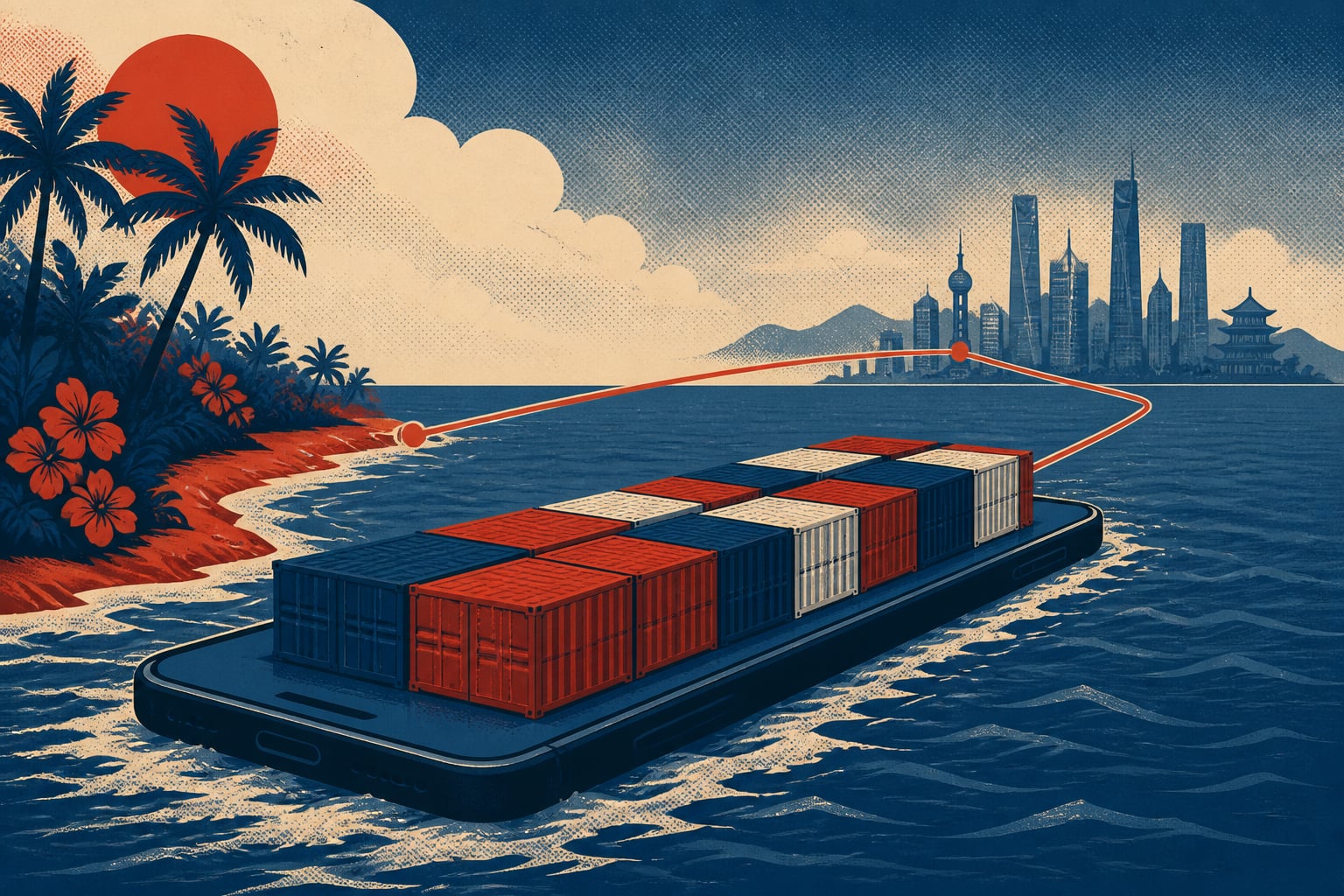
On September 25, 2026, a seminar titled "Promoting Cross-Border Payment via QR Code: A New Driver for Retail and Tourism" was held in Hanoi, organized by VnEconomy together with the Payment Department of the State Bank of Vietnam (SBV) and the National Payment Corporation of Vietnam (NAPAS). The central message: the QR code, long a household payment method domestically, is now crossing Vietnam's borders and becoming infrastructure for inbound tourism and retail.
According to VnEconomy, NAPAS has built a consistent chain of integrations: with UnionPay International in December 2025, with Alipay in April 2026, and with Weixin Pay (WeChat Pay) in August 2026. In parallel, bilateral schemes were launched: on July 2, 2026, NAPAS together with Singapore's Liquid Group and VietinBank announced a service between Vietnam and Singapore with real-time SGD↔VND conversion, and in May 2026, QR payments with South Korea were launched jointly with GLN International, BIDV, and Hana Bank, based on an agreement signed at the Vietnam–Korea Economic Forum in August 2025.
The scale of the infrastructure all this is built on is also telling: according to NAPAS top management, the system processes around 35–36 million transactions per day. This is not a napkin pilot but a working national rail, to which external wallets are now being connected.
WHAT IT MEANS
For Russian e-commerce looking at Southeast Asia, the main shift here is not in tourism but in the cost of payment acceptance. The classic pain point when entering the Vietnamese market is not logistics or finding a supplier—it's the payment stack: local cards, local wallets, acquiring, fees, refunds. Cross-border QR changes the logic: the buyer doesn't need to open a new wallet for Vietnam; they pay with their usual app, and the seller receives money through the already-integrated NAPAS rail. For a small brand, this lowers the entry barrier—no need to build a separate payment integration for each country in the region.
The second effect is tourist traffic as a sales channel. Chinese, Korean, and Singaporean tourists who pay with Alipay, WeChat Pay, or through Korean and Singaporean schemes are a solvent audience already physically present in Vietnam. If a Russian brand sells cosmetics, supplements, clothing, or electronics through Vietnamese retail or a marketplace, these buyers become more accessible: they don't need to be explained how to pay.
The third layer is regulatory. Since July 2024, Vietnam has mandated biometric authentication for banks and payment intermediaries under Decision 2345 and Circular 50, which NAPAS has reported compliance with. The SBV explicitly speaks of the need for a synchronized legal framework specifically for cross-border payments. This means the rules of the game will be refined, and businesses will have to keep their compliance contour alive rather than "set it once."
And a fourth point often overlooked: discrepancies in launch dates. VnEconomy dates the integrations with UnionPay, Alipay, and Weixin Pay to specific months, while NAPAS in its press releases describes the bilateral schemes with Korea and Singapore with separate dates—May and July 2026. This is a normal picture for a market where aggregator integrations and partner schemes operate in parallel. But for an entrepreneur, it's a signal: don't rely on a single "launch" date; verify whether a specific channel works in your settlement scenario.
VIETSMART EXPERT COMMENTARY
I'm in Ho Chi Minh City and see this every day in operations. Our partners—small Russian brands entering Vietnam through local retail and marketplaces—most often stumble not on logistics but on the same thing: they try to set up payment acceptance the way they're used to in Russia and don't account for the fact that the Vietnamese buyer pays with a QR code from their banking app. When we explain that payment can go through an already-integrated rail rather than building separate acquiring, the conversation changes. The most common mistake I see: a brand arrives with a ready website and expects "payment to somehow get connected." In Vietnam, the payment scenario is designed first, not last.

A second practical takeaway: don't chase all channels at once. Start with one—for example, the one that already covers your target audience: Chinese tourists via Alipay and WeChat Pay, Korean via GLN International, Singaporean via Liquid Group. This is cheaper and faster than trying to connect everything in parallel.
CONCLUSIONS AND WHAT TO DO
- Check which QR channel covers your audience. If you work with Chinese buyers, ask your acquiring partner about the status of integration with Alipay (April 2026) and Weixin Pay (August 2026); if with Korean buyers—with GLN International and Hana Bank; if with Singaporean—with Liquid Group and VietinBank. Don't rely on generic statements that "QR works."
- Recalculate your cost of payment acceptance. Request the exact commission for the QR scenario from your Vietnamese partner or marketplace and compare it with what you currently pay for card acquiring. The difference can be several times over, and it changes unit economics.
- Build your compliance contour with a buffer. Since July 2024, Vietnam has mandated biometric authentication under Decision 2345 and Circular 50, and the SBV is preparing a legal framework for cross-border payments. Ask your partner how they meet these requirements and request written confirmation.
- Test the tourist channel separately. If your product can sell in retail in tourist areas (Ho Chi Minh City, Hanoi, Da Nang, Phu Quoc), check whether the point of sale accepts cross-border QR. This can bring in buyers without additional marketing spend.
- Don't build your strategy on a single launch date. Sources differ on dates (VnEconomy, NAPAS press releases), so specify in your contract with the partner not a "launch date" but a concrete working scenario: which currency, which conversion, which settlement timeline.
Source: VnEconomy EN — Business, September 25, 2026