THE PRAGMATIC IMPERATIVE
In an era of globalization, modern businesses are constantly challenged to optimize their supply chains. In Vietnam, with its extensive coastline, complex mountainous terrain, and developing infrastructure, ensuring efficient logistics is particularly crucial. Business owners and top-level managers aiming to enhance competitiveness inevitably realize that standard solutions often fail to deliver the desired balance between speed, cost, and delivery reliability. This is precisely where the pragmatic value of multimodal transportation becomes evident.
The true business challenge isn't merely moving goods from point A to point B, but rather establishing a sustainable, predictable, and economically justifiable delivery system that minimizes operational risks. Vietnam offers a broad spectrum of transportation options – sea, road, rail, and air. However, effectively combining these modes demands a deep understanding of local specificities, regulatory nuances, and potential bottlenecks. A lack of systematic approach to selecting and integrating transport modes can lead to uncontrolled cost increases, extended delivery times, and consequently, reduced margins and loss of market share. This article aims to provide analytical tools for making strategically sound decisions in multimodal logistics.
THE OPERATIONAL FRAMEWORK
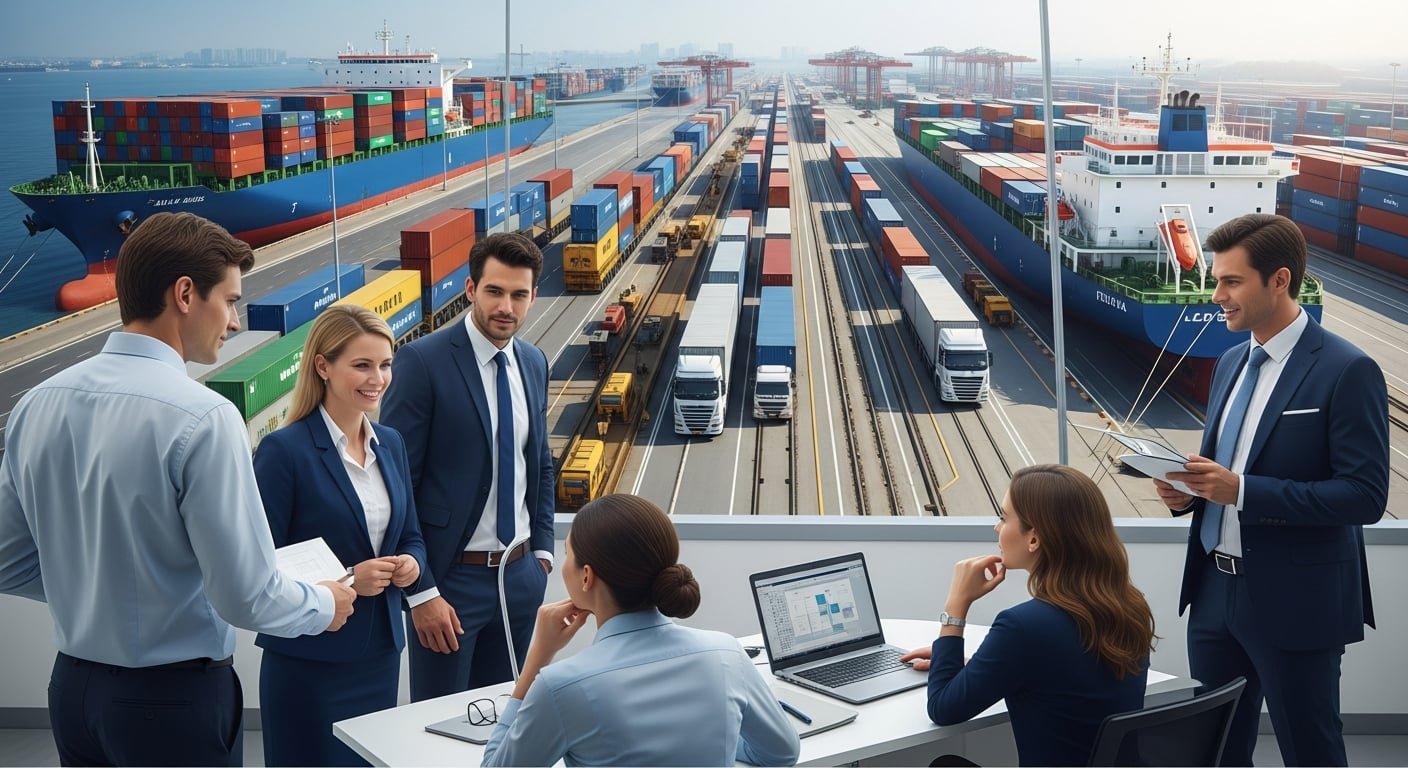
In practice, organizing multimodal transportation in Vietnam is a multi-stage operation requiring precise coordination. It begins with sea or air freight delivery to the country's main transport hubs, such as major ports or international airports. Upon cargo arrival, customs clearance procedures follow, which can be significantly streamlined with pre-prepared documentation and a reliable customs broker. At this stage, any inaccuracy or delay incurs regulatory costs.
Subsequent cargo movement utilizes land transport. Road transport offers flexibility and door-to-door delivery but is susceptible to the conditions of road infrastructure, which in some regions of Vietnam remains a challenging operational area with high costs for errors, especially during monsoon seasons or in urban agglomerations. Rail transport, though less flexible, provides stability and cost-efficiency for heavy cargo on specific routes. The development of the railway network, connecting key industrial zones and ports, is gradually expanding its potential. Combining these transport modes requires meticulous planning of transshipment operations, monitoring cargo integrity, and maintaining temperature regimes if required. The absence of a unified monitoring system across all route stages leads to a loss of visibility and reduced operational control.

PROCESS ECONOMICS
The efficiency of multimodal transportation is determined not solely by direct transport tariffs but also by a confluence of indirect costs that can significantly impact unit economics. The primary objective is to avoid margin erosion, which often occurs due to an underestimation of the comprehensive nature of logistics costs. Hidden costs include: demurrage and container detention, storage of cargo at terminals beyond standard free time, additional transshipment fees in case of suboptimal planning, cargo insurance against a wide range of risks, and administrative expenses related to processing numerous permits and documents.
A significant portion of economic losses stems from inefficient time management. Customs delays, logistical bottlenecks in ports or on key road arteries, and unsynchronized interaction among various supply chain participants lead to lost revenue from late deliveries or increased working capital tied up in transit cargo. Tax obligations also play a crucial role. In addition to standard import duties and VAT, specialized excises or environmental compliance fees may apply. Incorrect commodity classification or insufficient attention to tax planning within the logistics chain can result in unforeseen additional payments and penalties. Effective process economics are only achieved through a comprehensive consideration of all these factors and continuous monitoring of operational metrics.
AUDITING LOGISTICS MODELS
Selecting the optimal management model for multimodal transportation is a strategic decision that determines the level of control, risks, and operational costs. An analysis of existing approaches highlights three primary models:
In-house Logistics Department (Self-Managed Logistics)
This model involves establishing or expanding an internal logistics department that assumes all functions of planning, coordinating, and controlling shipments. Advantages include maximum operational control, deep understanding of specific goods and processes, and potential savings on intermediary margins for high volumes. However, this comes with significant capital expenditures for personnel, technology, and sometimes even a dedicated transport fleet. Risks include high operational burden, reliance on the expertise of a limited number of specialists, and challenges with rapid scaling or adaptation to changing market conditions.
Single Logistics Service Provider (Partner)
This model entails outsourcing all multimodal transportation organization functions to a single third-party logistics provider (3PL). This offers a single point of contact, simplifies administration, and reduces the operational burden on the client company. The provider coordinates all links in the chain, including interaction with subcontractors, customs clearance, and insurance. Key risks include dependence on the competence and reliability of one partner, potential loss of operational control over specific route segments, and less pricing transparency. Selecting such a partner requires thorough vetting of their reputation, experience, and financial stability.
Combined Model (Multiple Specialized Partners / 'Logistics Marketplace')
This model involves collaborating with several specialized providers, each responsible for a specific stage or mode of transport (e.g., one for sea freight, another for road transport, a third for customs clearance). In a sense, it can be compared to using a logistics 'marketplace' where the best offers for each segment are selected. Advantages include flexibility, the ability to choose 'best-in-class' suppliers, and cost optimization at each stage. However, the main drawback is the significantly increased complexity of coordinating and managing relationships with numerous counterparties. This raises the risk of losing operational control and potential margin erosion due to failures at the interfaces between different providers, and also complicates the process of resolving disputes.
THE SOLUTION ALGORITHM
To effectively organize multimodal transportation in Vietnam, it is essential to follow a systematic algorithm that enables progression from a pilot project to full-scale implementation while minimizing risks.
1. Detailed Needs Analysis
- Define cargo characteristics: volume, weight, dimensions, temperature requirements, fragility, value.
- Specify route geography: origin and destination points within and outside Vietnam.
- Formulate key KPIs: required delivery times, maximum budget, reliability level.
2. Selecting Optimal Transport Mode Combinations
- Based on cargo and route analysis, identify the most suitable combinations of sea, road, rail, and air transport for each segment of the journey. For example, sea transport for the main leg, followed by road or rail for the 'last mile'.
- Calculate preliminary costs and timelines for several alternative scenarios.
3. Risk Assessment and Management
- Identify potential risks at each stage: customs delays, weather conditions, fragmented courier infrastructure in remote areas, fuel price fluctuations, changes in the regulatory framework.
- Develop plans to mitigate these risks and create contingency scenarios.
4. Partner Selection and Verification
- Conduct a thorough selection process for logistics providers, freight forwarders, customs brokers, and carriers. Evaluate their experience, reputation, technical capabilities, and financial stability.
- Enter into transparent contracts with clearly defined terms of responsibility and KPIs.
5. Pilot Project
- Launch a test shipment with a limited volume or less critical cargo.
- Meticulously track all stages, recording actual timelines, costs, and any issues encountered.
- Collect feedback from all participants in the chain.
6. Monitoring, Optimization, and Scaling
- Based on pilot project data, analyze the effectiveness of the chosen model and make adjustments.
- Automate data collection and reporting processes for continuous monitoring.
- Gradually scale the successful model, continuously seeking opportunities for further process optimization and cost reduction. This is strategic pragmatism in action.