THE PRAGMATICS OF STRATEGIC INTENT
Modern importers focusing on Asian markets face a complex array of challenges where logistics efficiency and optimized customs costs are crucial for competitiveness. Vietnam, positioned as a key regional hub, offers the mechanism of Free Economic Zones (SEZs), which requires a systematic approach to evaluation. For business owners, the primary objective is not merely delivering goods, but minimizing the total cost of ownership of a product until its sale or further processing. SEZs are not a universal panacea, but rather a precise instrument for reducing fiscal burdens and accelerating operational processes when strategically planning entry into the Vietnamese market or utilizing it as a transit hub. It's important not to start with inflated expectations of instant business model transformation. We are talking about a precision tool.
OPERATIONAL FRAMEWORK
The operation of Free Economic Zones in Vietnam is based on principles designed to stimulate foreign trade, production, and investment by offering special regulatory and fiscal conditions. Practically speaking, SEZs are specifically designated geographical areas where goods can be imported, warehoused, processed, or manufactured with deferred or complete exemption from customs duties and certain taxes until they are released into the domestic market or re-exported.
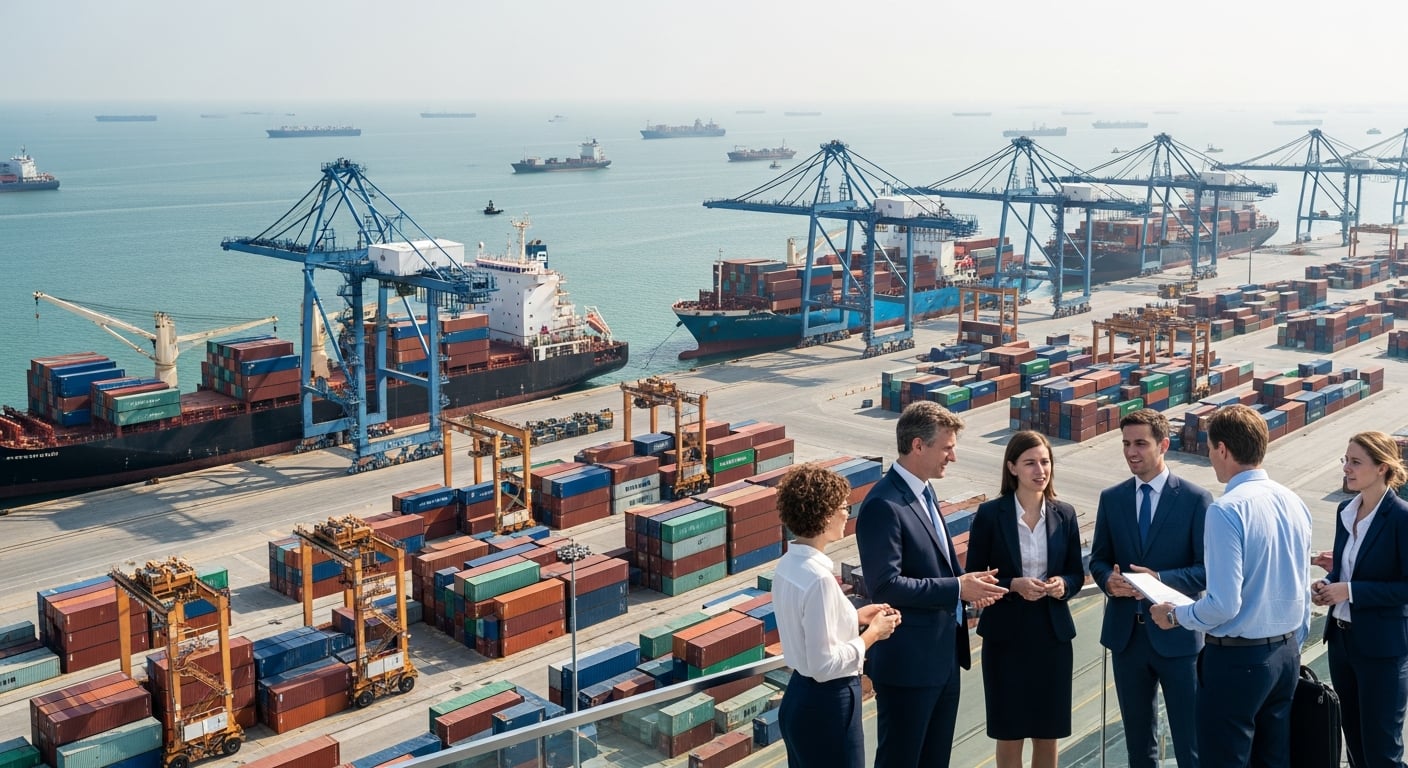
From a logistics perspective, key SEZs are often integrated with major seaports, international airports, and boast developed road infrastructure. This ensures direct connectivity to global transport arteries, minimizing the time and cost of goods movement. Importers can utilize these zones for cargo consolidation, deconsolidation, labeling, packaging, and even light assembly without immediate submission to all customs procedures mandated for general imports.
The operational mechanism provides for simplified customs formalities for goods entering an SEZ and departing it under re-export conditions. For goods destined for domestic consumption in Vietnam, customs duties and VAT are only paid upon their release from the SEZ into the country's main territory. This enables effective cash flow management by deferring tax liabilities.
However, it is crucial to note that each SEZ may have its own specific rules and a list of permissible activities. Non-compliance with regulatory requirements within the zone, such as storage durations or processing conditions, can lead to penalties and nullify the initially gained advantages. This is a complex operational area where the cost of error is high.
PROCESS ECONOMICS
The economic viability of utilizing Free Economic Zones for importers is realized at multiple levels. The primary advantage lies in the significant reduction or deferment of customs duties and VAT. This directly impacts unit economics, reducing capital expenditures associated with storing large volumes of imported goods and improving capital turnover. Businesses gain the flexibility to respond to market demand, maintaining necessary inventory levels without immediate fiscal burden.
Furthermore, SEZs may offer corporate income tax preferences for companies engaged in specific activities, further boosting profitability. Optimization of warehousing operations also contributes to cost savings: reduced expenses for rent, personnel, and handling can be achieved through specialized infrastructure and more efficient processes characteristic of these zones.
However, there are also potential points of profit erosion. These include:
- Administrative Costs: Document management, compliance reporting, and interaction with local regulators require resources and expert knowledge.
- Operational Risks: Inefficient inventory management or errors in logistics chains within an SEZ can lead to loss of goods, damage, or exceeding storage deadlines, incurring penalties.
- Currency Risks: Fluctuations in exchange rates are always relevant for international operations.
- Complexity of Returns: Procedures for returning or disposing of non-moving inventory located in an SEZ can be more complex and costly.

Importers should conduct a detailed calculation of the total cost of ownership and operational expenses, considering all potential risks and benefits, not just the apparent savings on duties. The problem might not be sales, but rather cash collection and tax optimization.
MODEL AUDIT
Selecting the optimal operating model for an importer leveraging SEZ advantages is critical for ensuring operational control and risk minimization. Let's examine three main strategies:
1. Own Operations within the SEZ:
- Control: Maximum. The company fully manages all aspects: from warehousing operations to customs procedures and distribution.
- Risks: High capital and operational expenditures, the need for deep understanding of local legislation and market specifics, risks of inefficient personnel and infrastructure management. Requires significant investment in establishing a legal entity, obtaining licenses, and building or leasing warehouse facilities.
- Applicability: For large importers or manufacturing companies that view Vietnam as a long-term production or distribution hub and are prepared for substantial investments and direct presence.
2. Partnership with a Local 3PL Operator (Third-Party Logistics) within the SEZ:
- Control: Moderate. Depends on contract terms. The operator assumes warehousing, transport, and customs functions.
- Risks: Dependence on partner competence and reliability, potential margin erosion due to commissions, risk of losing operational control. Requires careful partner selection, due diligence, and KPI development.
- Applicability: For medium to large importers seeking a balance between control and investment, wishing to leverage local partner expertise and scale quickly. Significantly lowers entry barriers.
3. Utilizing a Marketplace (with infrastructure within or outside the SEZ):
- Control: Low. The company essentially delegates distribution and logistics functions to the platform.
- Risks: Limited control over pricing, delivery conditions, and interaction with the end consumer. Dependence on marketplace policy. SEZ benefits may only be realized indirectly, through marketplace vendors if they utilize these zones. Fragmented courier infrastructure can become an issue when delivering from a marketplace to a customer.
- Applicability: For pilot projects or high-turnover goods where speed to market and minimal initial investment are priorities. Suitable for testing hypotheses.
The optimal model choice is always individual, determined by the volume of operations, willingness to invest, and risk tolerance. It is crucial to conduct a thorough audit of all potential models, aligning them with long-term strategic goals.
DECISION ALGORITHM
Deciding to utilize Vietnam's Free Economic Zones requires a structured approach. We propose the following action algorithm:
Stage 1: Preliminary Assessment and Goal Setting
- Product and Market Analysis: Determine how much the product benefits from reduced customs duties. Assess the potential volume of import/re-export and domestic market demand.
- Legal and Tax Audit: Consult with experts on Vietnamese legislation regarding the applicability of tax incentives and regulatory requirements for specific types of activities and products.
- SEZ Selection: Identify the most suitable SEZs based on their specialization (e.g., industrial, port), geographical location (proximity to target markets or production sites), and available infrastructure. Do not limit yourself to one zone without proper analysis.
Stage 2: Pilot Project
- Pilot Strategy Development: Formulate a small, manageable pilot project to test hypotheses and refine operational processes. This could involve importing a limited batch of goods or assembling a test series.
- Partner or Presence Format Selection: At this stage, it is advisable to consider partnering with an experienced 3PL operator with a track record in the chosen SEZ. This reduces initial investment and allows leveraging established channels.
- Logistics and Customs Process Setup: Work with the partner (or independently) to refine all links in the chain: from international freight to storage, customs clearance, and delivery to end consumers or production lines.
Stage 3: Scaling and Optimization
- Pilot Results Analysis: Meticulously evaluate the economic efficiency of the pilot project, identify bottlenecks and potential risks. The problem is not sales, but cash collection and tax optimization.
- Integration with Regional Supply Chains: If Vietnam is positioned as a regional hub, integrate SEZ operations with a broader regional logistics network, leveraging the benefits of free trade agreements.
- Continuous Monitoring and Adaptation: Market conditions and the regulatory environment are dynamic. Constant monitoring of changes and readiness for rapid strategy adaptation are essential.
This algorithm provides a methodical approach to extracting maximum advantages from the opportunities offered by Vietnam's Free Economic Zones, while simultaneously minimizing operational and financial risks.