
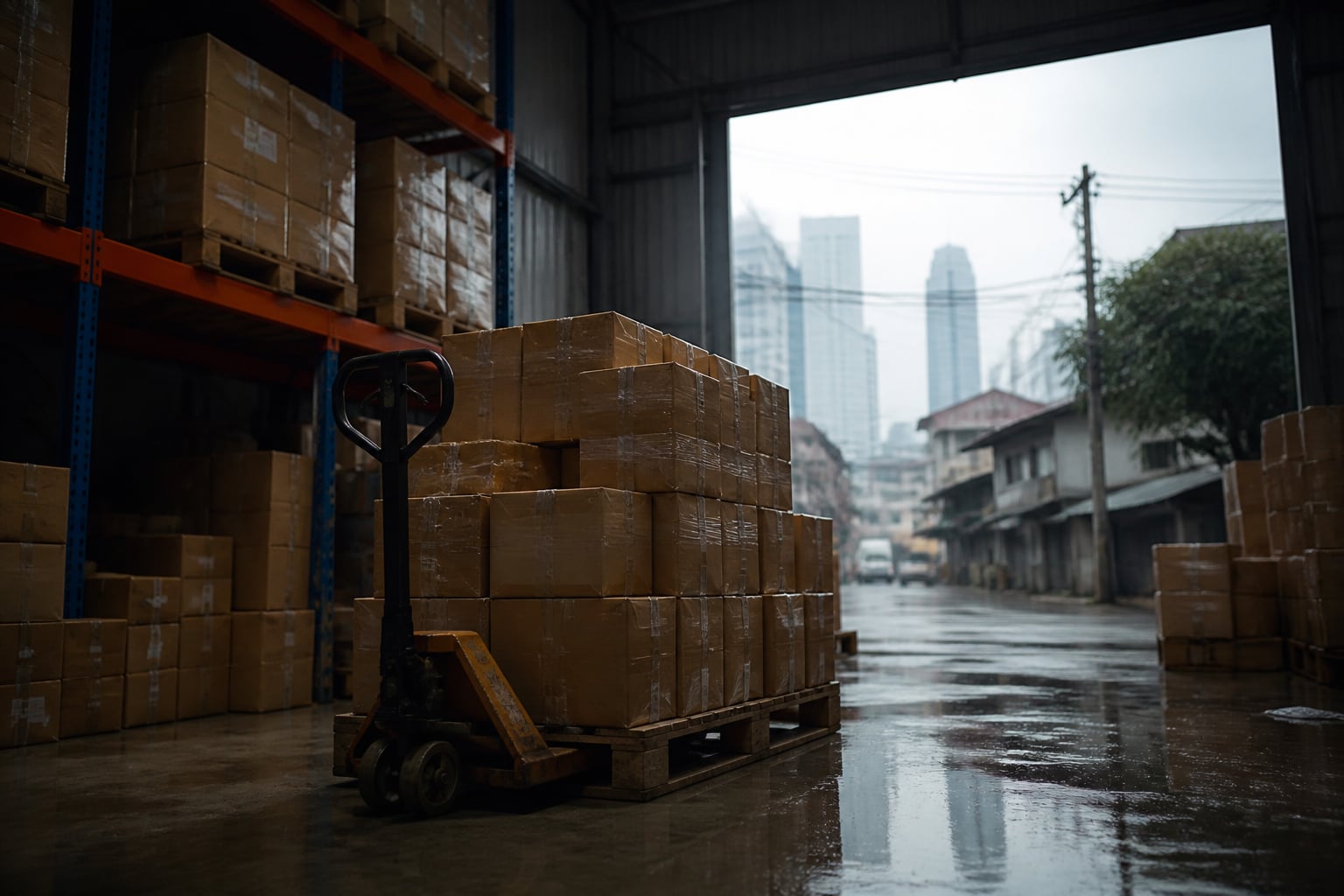
Brands bring me this belief almost every week: "give us more antifraud, more checks, more manual control — and returns will drop." I don't argue. Returns really hurt. But from operations in Ho Chi Minh City, I see how the Vietnamese peak season is structured differently: there, purchase protection is not a wall but a filter. And a filter costs money only when it's the right one.
What happened in the market worth watching
In 2025, Vietnam's four largest platforms — Shopee, TikTok Shop, Lazada, and Tiki — collectively generated approximately VND 429.7 trillion, or about $16.6 billion, with growth of around 35% year over year. This is Metric data cited by VnExpress in a publication dated January 15, 2026.
Let me clarify right away: different agencies have different figures. YouNet ECI in materials from Vietnam News gives another estimate — closer to VND 458 trillion. The difference is not about who is lying, but about what is counted: whether social commerce, small marketplaces, and livestream sales outside platforms are included. For a brand's decision, this doesn't matter. What matters is something else: the market is growing at double-digit rates for the second year in a row, and along with it, the burden on service is growing.
According to MBS in a report dated October 7, 2025, in the first half of 2025 alone, the delivery sector's revenue amounted to VND 38.3 trillion, with parcel volume at around 1.8 billion orders. This is not a "peak day." This is the normal operating mode, in which returns and disputes become not an exception but a regular operational line item.
What really changes during peak season
The key observation from 2026 reports: the Vietnamese peak is no longer a single day. According to Vietnam News citing YouNet ECI, shoppers distribute spending across 9.9, 10.10, 11.11, 12.12, and New Year sales. EcomEye in a September 2026 review describes this as the peak "crumbling" into several campaigns.
For a seller, this changes everything. If previously you could mobilize warehouse and support once for 11.11, now you have five or six separate waves per quarter. And each wave is a separate surge of returns, disputes, and fraud attempts.
That is why Vietnamese platforms did not go the route of "strengthen checks" but the route of "segment buyers." On November 24, 2025, Shopee changed its return policy: according to EcomDaily, requirements for returns on the grounds of "item is intact but not needed" were tightened — primarily for non-premium buyer segments.
It seems logical: protect the seller from capricious returns. In reality — no. This is not about protecting the seller. This is about risk segmentation.
Returns are not a problem, they are a signal
I don't argue: returns are expensive. Round-trip logistics, repackaging, lost product presentation, frozen money. But there is a nuance that changes the economics entirely.
A return is not one problem. It is two different problems, and they require different solutions.
The first type — return as a consequence of poor service. The item arrived late, wrong size, description didn't match, packaging was broken. This is your fault, and here fighting returns is simply working on quality. No antifraud will help here.
The second type — return as a consequence of abuse. The buyer ordered three sizes to try on and returned two. Or ordered "to take a look" and returned without reason. Or, worse, swapped the item and demands money back. This is where rules are needed.
The Vietnamese model I see among partners on Shopee Mall works precisely with this division. A premium buyer with order history is given more freedom — because their return is statistically predictable and doesn't destroy margin. A newcomer without history gets less freedom, but with a clear path to earning it.
This is not about punishment. This is about managing trust as an asset.

What the regulator says and where the buyer hurts
An important layer that Russian sellers often miss: in Vietnam, purchase protection is not only platform policy but also a state framework.
Decree 117/2025/ND-CP on e-commerce tax administration is in effect — platforms are required to withhold and declare taxes for sellers. In parallel, a new e-commerce law is being promoted with seller verification via VNeID and regulation of livestream trading, as reported by Digital in Asia in the SEA E-commerce 2026 review. Seller verification is not bureaucracy. It is the first level of antifraud: the buyer knows that behind the account is a real person or company.
Now let's look at what buyers complain about. According to Vietnam Competition Authority data for 2025, the structure of complaints is led by account blocks — about 13%, delivery issues — around 12.5%, complaints about counterfeits and description mismatch — 11 complaints in each category.
Note the order. In first place — not scammers. In first place — account blocks. That is, the most frequent buyer complaint is not "I was cheated" but "I was blocked without explanation."
This is the main mistake of antifraud: it hits honest buyers harder than scammers. And each such hit is a lost customer lifetime value.
What I see from operations
At VietSmart, we launch partners on Shopee Mall and see the same pattern. Brands that come with Russian experience first want to set "strict rules": prepayment, limiting the number of orders from one account, manual verification of suspicious addresses.
After two months, they roll back half of these measures. Because they see: conversion dropped more than returns. And returns didn't fall as expected — because scammers adapt faster than honest buyers get used to new rules.
What works for those who stay on the platform long-term?
- Buyer history matters more than current behavior: one order from a new account should not influence the decision.
- Speed of return matters more than its prohibition: a fast return is cheaper than a two-week dispute.
- Transparency of rules matters more than their strictness: a buyer who knows the rules in advance argues less.
- Category logic matters more than general: returns in clothing and electronics are different economies.
Separately, about peak season. Based on what we see among partners, the most expensive mistakes happen not on sale days but in the two weeks after. When the flow of orders subsides, but the flow of returns is just beginning. And if you don't have a separate process for this period, you pay for it twice: first in logistics, then in reputation.
What a Russian brand should do before its own peak
I won't give generic advice like "improve service." Here are specific steps you can check.
- Divide returns into two categories in your analytics: service and behavioral. If you have one number, you don't know what to fix.
- Introduce different return rules for buyers with history and without. Not a ban — but different timelines and different conditions. This works better than a single policy.
- Calculate the cost of a return not by the cost of goods but by the full chain: round-trip logistics, processing, lost product presentation, frozen money.
- Set up a separate operational mode for two weeks after the peak. This is not the same process as during the peak — the load is different.
- Check how your seller verification system looks through the buyer's eyes. If they don't understand who you are, they won't come back.
This is not about becoming stricter. This is about becoming more predictable.
Your next move
Open your return statistics for the last 90 days. Look at what share comes from buyers with a single order. If this share is noticeably higher than their share in revenue, you have a problem not with antifraud but with the quality of first impression. Set up a separate scenario for new buyers. Check in a month.
At VietSmart, we cover the entire operational contour for Russian brands entering the Vietnamese market — from listing on Shopee Mall to setting up return policies under local platform rules. Our partners' first sales usually come within 60–90 days after launch. If you are planning your peak season in advance, it makes sense to start with an analysis of your current return economics — before you enter a new market.