
What Happened
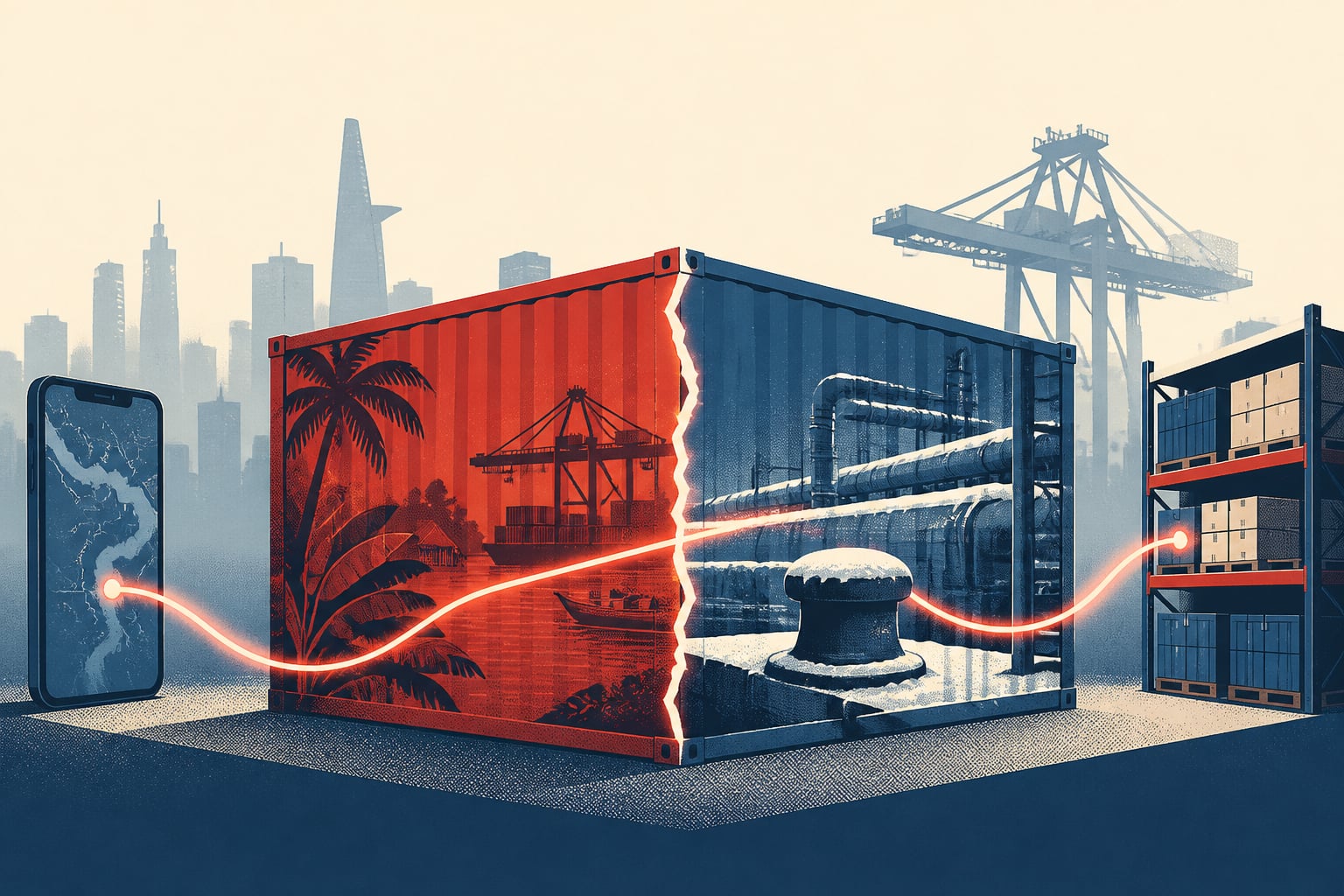
On October 16, 2026, Vietnam+ (VietnamPlus) published a report stating that trade between Vietnam and Russia is entering a phase of structural realignment. This is not a one-off surge in turnover, but a shift in the very logic of goods flows: the product mix is changing, the share of industrial and raw material components is growing, and consumer categories are being redistributed between old and new channels.
Formal statistics confirm that movement is happening in both directions. According to VnEconomy, citing Vietnam's General Department of Customs, bilateral turnover in January 2026 amounted to USD 375.39 million, with Vietnam's exports to Russia up 34.5% year-on-year and imports from Russia up 19%. According to the official summary from the Vietnamese government portal, in the first seven months of 2026, turnover reached US$3.24 billion, up 12% compared to the same period in 2025, with imports from Russia (US$2.51 billion) outpacing Vietnamese exports (US$2.26 billion).
At the same time, Vietnam is tightening and detailing its foreign trade rules. The government gazette BaoChinhPhu published lists of goods prohibited for import and export, including Decree No. 292/2026/NĐ-CP dated July 22, 2026, and Vietnam's Ministry of Industry and Trade issued a consolidated document 67/VBHN-NĐ-BCT dated July 9, 2026, clarifying trade control procedures. For a procurement specialist, this means one thing: gray schemes and "contractual" categories are shrinking, and the legal assortment requires verification against the lists.
What This Means
For Russian e-commerce, the realignment of flows is not read through macro figures but through three things: assortment, purchase price, and logistics. The first and most sensitive point is that the structure of imports from Vietnam to Russia is shifting. If previously a significant portion of marketplace shelves relied on consumer categories with high purchase frequency, now, according to Vietnamese customs data, AsemConnect Vietnam summaries show faster growth in raw material and industrial items—ferrous metals, certain types of steel, pepper, footwear. This does not mean the consumer shelf is disappearing, but competition for containers and warehouse space between "industrial" and "consumer goods" players is growing.
The second point is price. When imports from Russia to Vietnam grow faster than exports (US$2.51 billion vs. US$2.26 billion in the first 7 months of 2026, according to Vietnam's government portal), it signals that Vietnam is becoming more actively involved in processing Russian raw materials and semi-finished goods. For a Russian seller, this is a double-edged story: on the one hand, some Vietnamese factories get cheaper raw materials and can lower selling prices for finished goods; on the other hand, the same factories are switching to orders with higher margins, and consumer SKUs are pushed to the back of the production schedule.
The third point is logistics and rules. New lists of prohibited imports and exports and the consolidated document from Vietnam's Ministry of Industry and Trade mean that some familiar categories may suddenly require additional certificates or even fall outside legal imports. For a Russian entrepreneur, this is the risk not of "price increase" but of "shipment not arriving": goods are purchased, paid for, but not released on the Vietnamese side. That is why in 2026, checking the HS code and whether it falls under prohibited lists is becoming a routine operation before, not after, signing a contract.
Separately, it is worth noting that 2025 data differ across sources. AsemConnect Vietnam estimates Vietnam's exports to Russia in 2025 at approximately USD 2.2 billion, while January summaries from VnEconomy citing customs give figures that, by methodology, are closer to USD 2.34 billion. The difference of 100–150 million dollars is not an "error" but different periods and methodologies. The practical takeaway for a procurement specialist: do not build a budget on a single figure from a single source, but keep a range and recalculate it every quarter.
Expert Commentary from VietSmart
In our operations in Ho Chi Minh City, the realignment is visible not in reports but in phone calls. In recent months, we increasingly receive Russian sellers with the same mistake: they lock in a supplier's price for three to four months ahead without checking whether the category has been added to updated trade control lists. Later it turns out the shipment needs to be re-papered, which adds two to three weeks to the timeline and cuts into margin. In such cases, we always ask the factory for written confirmation that the goods are not included in the prohibited lists under Decree No. 292/2026/NĐ-CP, and only then do we discuss price.
The second point is the assortment shift. We see how Vietnamese factories are increasingly willing to take orders for industrial items and less willing to take on small-batch consumer assembly. For a Russian brand, this means it is more profitable to move into categories where Vietnam is building expertise: footwear, pepper and spices, certain types of metal products, rather than trying to squeeze margin from what is already going to other countries.

Conclusions and What to Do
- Check your current assortment against the updated lists: verify HS codes with Decree No. 292/2026/NĐ-CP and the consolidated document from Vietnam's Ministry of Industry and Trade 67/VBHN-NĐ-BCT. If a category is on the list, look for a replacement before purchasing, not after.
- Request written confirmation from the supplier regarding the legality of the category and certificates (including CFS for food and cosmetics). Verify numbers in official databases, not just verbally.
- Recalculate your procurement budget with a range for exchange rates and data from two sources—AsemConnect Vietnam and VnEconomy. Do not rely on a single figure: the discrepancy for 2025 reached 100–150 million dollars.
- Shift focus to categories where Vietnam is expanding production: footwear, spices and pepper, certain types of metal products. For consumer SKUs with long assembly cycles, competition for production slots will increase.
- Build an additional buffer into logistics: two to three weeks for re-papering documents and an alternative carrier in case the shipment gets stuck on the Vietnamese side. This is cheaper than frozen goods in a warehouse.
Source: Vietnam+ (VietnamPlus) dated October 16, 2026