
WHAT HAPPENED
Shopee's 9.9 sale in 2026 featured two distinct demand anomalies: shoppers overwhelmingly chose expedited delivery and bulky items. This is reported by Vietnam.vn on September 18, 2026. On the surface, this is a local Vietnam story, but behind it lies a pan-Asian mechanism worth examining separately.
Context: 9.9 in 2026 stopped being a one-day event. According to promo calendars, the Singapore sale window closed only on September 17 — meaning the campaign stretched over more than a week. This changes the logistics load profile: the peak doesn't compress into a single day but spreads out, and the winners are sellers who can maintain a stable SLA all week, not just on D-Day.
The scale against which this is happening: according to Momentum Works, Southeast Asia's e-commerce GMV in 2025 was about $157.6 billion, growing roughly 22.8% year over year (data cited by Digital in Asia). Within that volume, Vietnam is one of the fastest-growing markets.
WHAT THIS MEANS
First. The Vietnamese market is effectively a duopoly, and this matters for assortment planning. According to Q&Me data for May 2025 – April 2026, the combined GMV of the country's four largest platforms was $13.6 billion, of which Shopee accounted for 53% (about $7.29 billion, up 21% year over year) and TikTok Shop for 44% (about $5.96 billion, up 83% year over year). These figures are cited by The Investor, referencing a Q&Me report.
Second. Data from different agencies diverge, and that's not a reason to ignore the topic but a reason not to build a strategy on a single number. Metric and Momentum Works paint a different picture: by the end of 2025, Shopee and TikTok Shop together controlled about 97% of Vietnam's platform GMV, while Shopee's share declined from roughly 61% in 2023 to a range of 52–56% in 2025–2026. This is reported by KrAsia. The discrepancies stem from methodology: different base periods, different treatment of direct sales and embedded channels. The practical takeaway for a seller is not to base your plan on a single market-share figure but to watch the dynamics of both platforms simultaneously.
Third, and most important for a Russian seller. Demand for speed and bulky goods isn't about marketing — it's about operations. Sea Limited's Q1 2026 report notes that Shopee Fulfillment Orders grew about 25% quarter over quarter, and in March 2026 more than a third of parcels in Asia were delivered "next day" — these data are cited by The Motley Fool from the Sea Ltd earnings call transcript. If a buyer in Ho Chi Minh City or Hanoi is used to next-day delivery, they won't wait three weeks for a parcel from abroad — they'll buy from a local seller.
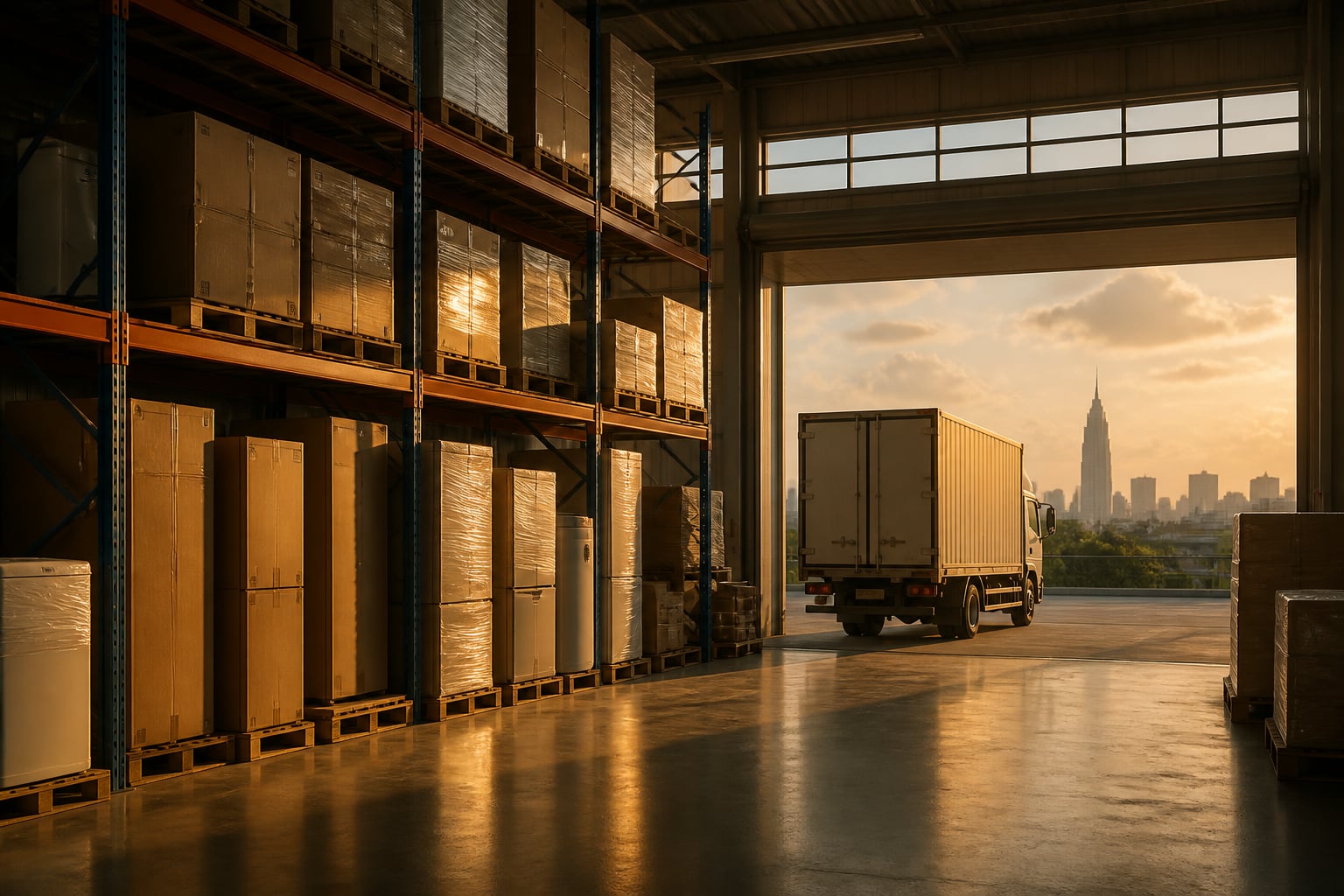
Fourth. Bulky goods break the classic cross-border model. A sofa, refrigerator, mattress, exercise machine — that's volumetric weight, last-mile delivery with a porter, and returns that cost as much as half the item. Selling such goods directly from Moscow to Hanoi is economically pointless. So the conversation is either about a local warehouse, a local fulfillment partner, or not entering this category at all.
VIETSMART EXPERT COMMENTARY
I'm in Ho Chi Minh City and I see this topic every day in operations. Russian sellers regularly come to us with the same question: "I want to enter Shopee Vietnam with a product from Russia, where do I start?" And almost always it turns out the person has already purchased a batch, calculated unit economics based on the product price and logistics "to the warehouse in Hanoi" — but didn't factor in last-mile delivery, packaging for bulky goods, and return costs. The most common mistake I see: people transfer the Russian logic of "the cheaper the product, the better" to a market where the buyer is already paying for speed and for having a heavy item brought into their apartment.
If I were a Russian entrepreneur, here's what I'd do: not try to compete with local sellers in the "fast delivery + small item" categories — it's already crowded there, and whoever has a warehouse in the country wins. Instead, I'd look for a niche where a Russian product is objectively unique or cheaper in cost, and build logistics for that — with a local 3PL, with an upfront volumetric weight calculation, and with an honest demand test via a small trial order.

CONCLUSIONS AND WHAT TO DO
- Recalculate unit economics with full logistics. Take your top product and calculate not only freight to Vietnam but also last-mile delivery, packaging for bulky goods, the return rate, and the cost of processing returns. If the margin is negative after that — the category isn't for you, and that's a normal calculation result, not a reason to redo it.
- Check the category for volumetric weight. Bulky goods are only profitable with a local warehouse or fulfillment partner inside Vietnam. Ask a potential 3PL for "to-the-apartment" delivery rates and bulky goods acceptance terms — not general ones, but specific rates by weight range.
- Don't build a plan on a single market-share figure. Q&Me gives Shopee 53%, while Metric and Momentum Works give a different range. Request fresh category-specific data from partners and agencies, not overall market shares: the picture in your category may be completely different.
- Test demand with a small batch through a local partner. Before shipping a container, run 50–100 units through a Vietnamese warehouse or dropshipping partner. You'll see the real return rate and the real delivery speed the buyer expects — cheaper than learning from a full batch.
- Account for extended promo windows. 9.9 in 2026 ran for more than a week, not a single day. Plan stock and customer support for the entire promo period, not just the peak date: running out of stock mid-window hurts a seller's rating more than not offering a discount.
Source: Vietnam.vn, September 18, 2026